
Emergency Air Duct Cleaning Near Me: What West Valley City Homeowners Should Do First
If you’ve just found a dead animal, a sewage smell, or a rodent trail inside your ductwork, the first 30 minutes matter more than the next 30 hours. Turn the HVAC system off at the thermostat right now. Don’t run the fan, don’t switch to heat to “see if it smells,” and don’t open the vents to look. The system is a shared pipe: every minute it runs, it pulls whatever is contaminating one branch and pushes it into the returns, the supply runs, and the coil. What you do in the first half hour decides whether one room is affected or the whole house. If you’d rather not work through the decision tree alone, call (844) 443-4789. We answer 24/7. Fast dispatch from 7am to 7pm, Sunday through Friday.
Step 1: Isolate the System and Stop the Spread in West Valley City
A duct emergency in West Valley City is a containment problem before it’s a cleaning problem. Contaminants travel through pressure, not gravity, so the moment the system goes quiet, the spread stops. Here’s the sequence we walk homeowners through on the phone.
- Switch the thermostat to Off, not Fan. The fan setting runs the blower regardless of temperature, which is exactly the wrong thing when something foul is in the duct.
- Close the registers in the affected zone. If you can tell the smell is coming from one room, close those supply registers and the return grille nearby. You’re creating a dead-end branch.
- Shut the return closest to the source. A closet return above a utility space, a bathroom return near a rodent sighting, or a return near a basement sump is the highest-priority closure.
- Open windows in unaffected rooms only. Fresh air in the contaminated room can push airborne matter deeper into the system through gaps in the ductwork. Unaffected rooms get ventilation; the contaminated one gets containment.
- Don’t vacuum with a household machine. A shop vac without a HEPA filter blows fine particles back into the air, and those particles land in the duct again.
- Photograph before you touch anything. A photo of the register, the debris, and your thermostat setting matters for insurance and for the technician’s preparation.
Once the system is static, you’ve bought time. In most West Valley City homes, the blower stays off until a technician with proper containment equipment is onsite. That’s the difference between cleaning one branch and cleaning the whole system.
Which Duct Problems Are True Emergencies and Which Can Wait 24 to 48 Hours
Not every bad smell needs a same-day call. Here’s how we separate the two in West Valley City, based on what’s actually contaminating the air.
True emergencies (call today)
- Sewage backup into ductwork. Sewage carries bacteria and pathogens that standard duct cleaning won’t address. This is a biohazard scenario and requires containment and sanitizing protocol, not a quick vacuum.
- Rodent activity in the ductwork. Droppings, nesting material, and urine create a hazard that spreads every time air moves. Rodents also chew insulation and duct seams, so the fix includes sealing and often repair.
- Post-fire smoke contamination. Smoke residue is acidic and continues to off-gas. Even a small kitchen fire can push soot into duct branches and the coil, and the damage gets worse with time, not better.
- Dead animal in a duct. The smell peaks in a few days, but the contamination and the associated insects don’t wait.
Urgent but schedulable (24-48 hours is fine)
- Heavy dust coming out of registers after renovation
- A musty smell that’s been building for weeks
- Visible dust on the return grille or around the air handler
- A dryer that’s taking longer than usual (check the dryer vent as a separate item)
Those last four are still worth addressing soon. They’re just not flooding-your-house emergencies, and scheduling a proper air duct cleaning visit gives the technician time to arrive with the right equipment and the right filter.
What to Have Ready Before You Call a Duct Cleaning Company
When you call, the person on the other end should ask you specific questions. If they don’t, that’s a warning sign. Here’s what we ask West Valley City homeowners, and why it changes how we prepare for the job.
- The contamination type. Sewage, rodents, smoke, and dust call for different equipment and different containment levels. A company that plans the same visit regardless should worry you.
- Where the smell is strongest. Supply side, return side, one room, or the whole house. This tells the technician which branch to isolate first and whether the main trunk is involved.
- The last time the system was serviced. If it’s never been cleaned, the technician should expect heavier buildup and plan more time.
- The system layout. Single-story or two-story, how many returns, whether the air handler is in the garage, attic, or a closet. In West Valley City’s cold-winter climate, air handlers in garages are common, and that affects containment.
- Whether anyone in the home has asthma or allergies. It changes the choice of filter, the sanitizer, and the order of operations.
- Insurance involvement. If a claim is likely, ask about documentation: before-and-after photos, a written scope, and an invoice that separates cleaning from any repair.
Gather these before you dial and the conversation becomes a technical exchange instead of a sales pitch. It also protects you from the “we’ll see when we get there” approach that leads to surprise charges.
Why Some Emergencies Need Biohazard Protocol, Not Standard Duct Cleaning
Standard duct cleaning removes dust and debris. Biohazard remediation removes pathogens. Those are not the same job, and knowing the difference protects your home.
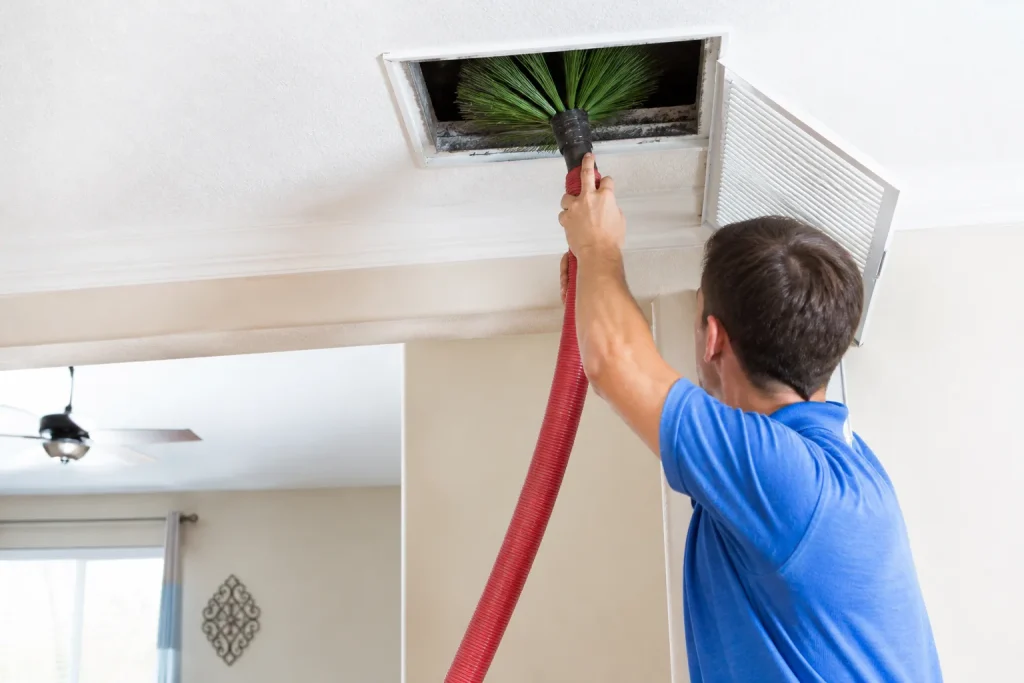
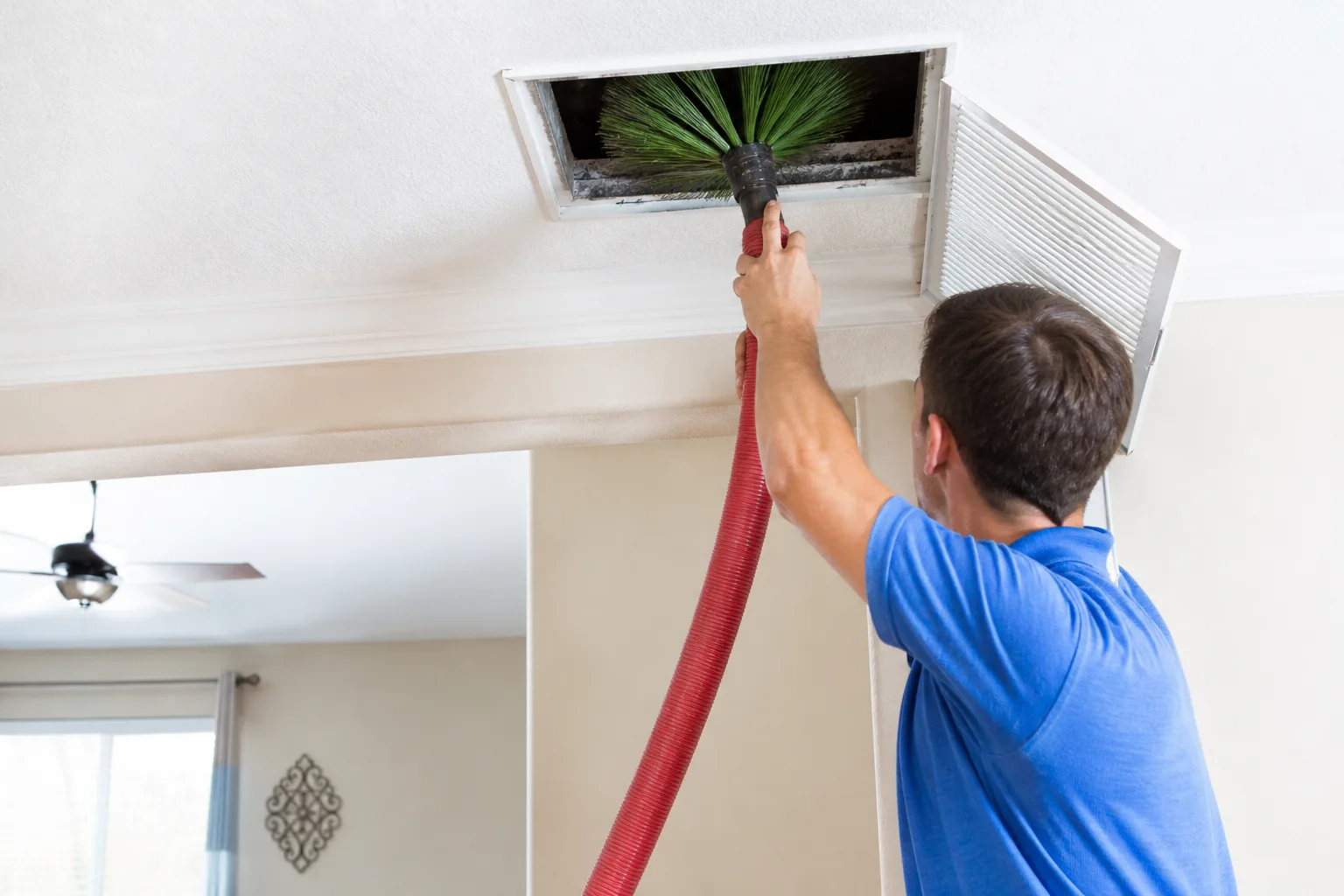
When the contamination is sewage, rodent waste, or fire residue, proper handling means negative-pressure containment so contaminated air can’t escape into living spaces. That’s where Abatement Technologies equipment comes in – the same negative-air and HEPA filtration tools used in professional remediation work. The technician establishes containment, works the affected branch, and only then applies sanitizing treatment. We use Guardsman antimicrobial treatments, which are applied to the duct interior when the situation calls for it.
Standard cleaning without containment on a biohazard job can push contaminants out of the duct and into the room. That’s the opposite of what you want. A company that skips negative air on a sewage or rodent job isn’t saving you time or money; they’re just relocating the problem. Ask directly: “Are you setting up negative pressure?” The answer tells you whether they’re equipped for the job.
On the mechanical side, we use Rotobrush and Nikro cleaning systems – contact-vacuum and negative-pressure equipment designed for HVAC duct interiors. It reaches the full length of a branch, not just what a shop vac can flex into. That’s what makes a proper cleaning possible in the first place. If a company can’t name their equipment, the equipment probably can’t do the job.
What to Ask Before You Agree to Same-Day Duct Cleaning in West Valley City
Same-day service is legitimate when it comes with the right preparation. Here’s the short list homeowners should insist on before saying yes.
- What equipment will be on site? Rotobrush, Nikro, or comparable professional systems, plus a negative-air setup for biohazard work. If the answer is a shop vac and a hose, book someone else.
- Is sanitizer included or an add-on? For a sewage or rodent job, sanitizing isn’t optional. It should be part of the scope, named on the estimate, and priced clearly.
- How will the work be documented? Before-and-after photos of your own ducts, a written scope, and an invoice that separates cleaning from repair or replacement. This is documentation your insurer will actually use.
- Will you check for damage? Rodents chew duct seams and insulation. A company that only cleans won’t find the leak that keeps pulling dust back in. We treat duct repair and sealing as core work, not an upsell.
- What’s the total price? One flat price per system, agreed before work starts. No per-vent pricing games at the end of the visit.
The written estimate sets the final price. If a company won’t put the scope in writing before the visit, that’s your answer.
When to call a pro
If the smell is coming from one room and the thermostat is off, you have time to research. If the source is sewage, rodents, or fire residue, or if anyone in the home has asthma or a compromised immune system, call today. Running a system with contaminated air for a few extra days almost always makes the job larger.
While a technician is onsite for a duct emergency, it’s a good time to look at the dryer vent cleaning and the HVAC cleaning as well. The system is already opened up, and the coil and blower cabinet are the two places contamination hides after the ducts are clean.
Related services in West Valley City
Air duct cleaning, dryer vent cleaning, HVAC cleaning, duct repair and sealing, and air sanitizing are all handled by one company – no juggling multiple contractors. If filtration needs upgrading after a contamination event, we work with Honeywell and Aprilaire products to match a filter to your system and your air quality goals. That’s the full chain, from the register to the air handler.
The Bottom Line
In a duct emergency, the first move is to stop the airflow, not to call around. Turn the thermostat off, close the affected registers and returns, and don’t run the system until a technician with proper containment equipment is onsite. True emergencies – sewage, rodents, post-fire smoke – need biohazard protocol with negative-pressure containment and sanitizing, not a quick vacuum. Dust, a musty smell, or post-renovation debris can wait a day or two, and scheduling a proper cleaning actually gives the technician time to arrive prepared. Gather your system details before the call, ask about equipment and documentation, and get one flat price per system in writing before work starts.
If you’re in West Valley City and need help, West Valley City Air Duct Cleaning offers free estimates. Call (844) 443-4789. We answer 24/7. Fast dispatch from 7am to 7pm, Sunday through Friday. Our technicians have up to 9 years of experience, and every job uses professional-grade equipment – Rotobrush, Nikro, and Abatement Technologies – not consumer shortcuts.
Frequently Asked Questions
Turn the thermostat to Off, not Fan, and close the registers and returns in the affected room. Don’t run the system to check the smell, which is the most common mistake we hear about. The blower spreads contamination through every branch it touches. Once the system is static, call a company that sets up negative-pressure containment – not one that plans to vacuum the branch with a shop vac. Call (844) 443-4789 once the thermostat is off and we’ll walk you through the next step.
Usually not. A musty smell that’s been building for weeks is urgent but schedulable within 24 to 48 hours. Sewage, rodent activity, and post-fire smoke are true emergencies because they involve pathogens, active contamination, or acidic residue that worsens with time. When you call, describe the smell and where it’s strongest – that’s the fastest way to sort the two. Call (844) 443-4789 and we’ll help you classify it.
Biohazard work is a different job. It requires negative-air containment equipment, HEPA filtration, and sanitizing treatment on top of the cleaning itself. Standard cleaning removes dust; remediation removes pathogens and prevents them from spreading into living spaces during the work. That equipment and process is what you’re paying for. A written scope and before-and-after photos let you see exactly what was done. Call (844) 443-4789 for a free estimate.
Sometimes, and it depends on the cause. Sudden events like a fire or a burst pipe that led to moisture often qualify; gradual problems like neglected maintenance usually don’t. The documentation matters as much as the coverage: before-and-after photos of your own ducts, a written scope of work, and an invoice that separates cleaning from repair or replacement. Ask for all three before work begins. Call (844) 443-4789 to schedule an estimate.
Written by the team at West Valley City Air Duct Cleaning.
Need Air Duct Cleaning Help?
Call West Valley City Air Duct Cleaning - the local pro we connect you with is licensed and insured, here with fast help in West Valley City.
(844) 443-4789