
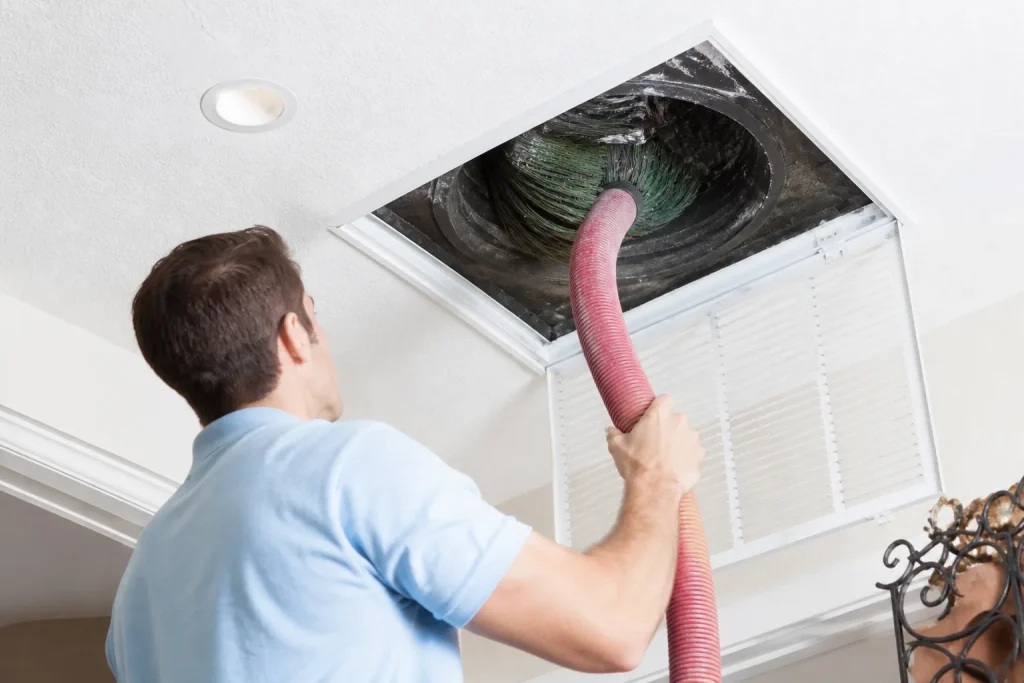
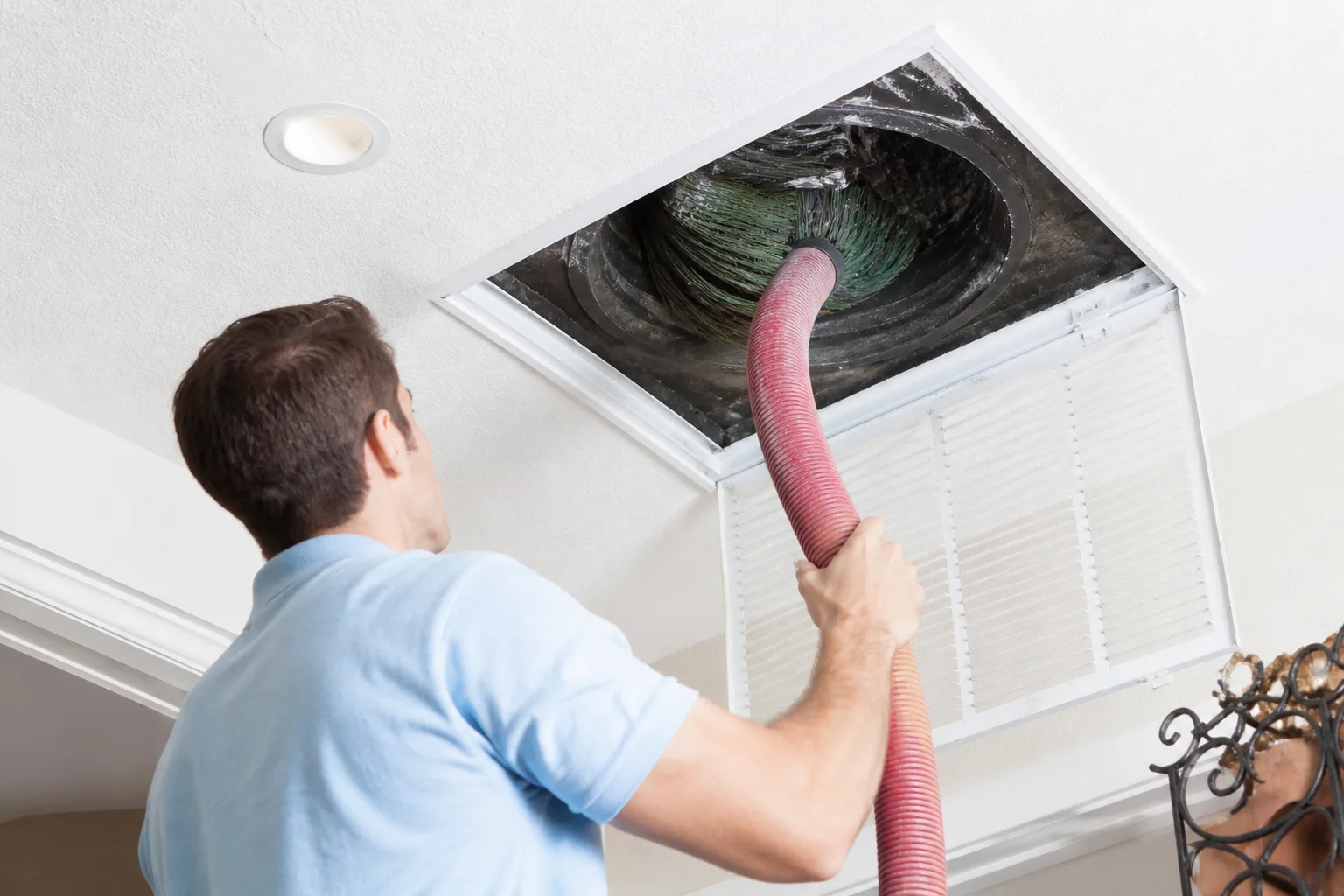
Air Duct Cleaning: Repair or Replace? How West Valley City Homeowners Decide
Here’s the mistake we see most: a homeowner books a cleaning, the technician runs a brush and vacuum through the vents, and three months later the dust is back. Nothing was broken, exactly. The ducts were just never worth cleaning in the first place. Cleaning deteriorated flex duct is like washing a shirt with holes in it. The debris is gone, but the system still doesn’t work, and you’ve paid for half a solution. In West Valley City, where a lot of housing went up between the 1970s and the 1990s, that distinction matters more than most people realize. Cleaning and repair are two different jobs. This is how to tell which one your house actually needs.
The short answer: if your ductwork is intact, sealed, and just dirty, clean it. If it’s collapsed, crushed, or coming apart at the seams, cleaning alone won’t fix your airflow, and you’re better off repairing or replacing the bad runs. If you’d rather not sort through that alone, call (844) 443-4789 and we’ll talk it through.
Dirty Ducts vs. Damaged Ducts: What’s the Actual Difference?
Dirty ducts are a contamination problem. Damaged ducts are a mechanical problem. They can happen at the same time, but they need different answers. Cleaning removes what’s sitting on the inside walls of the duct. Repair fixes the structure of the duct itself so it can carry air the way it’s supposed to. If you only clean, you’ve handled one half of the equation.
In our experience across West Valley City, most homes we look at have some combination of both. The question isn’t “which one do I have?” It’s “how much of each?” A technician who can honestly read that for your house is more valuable than one who comes in already knowing what they’re going to sell you.
- Clean-only territory: ductwork is sealed, flexible runs are intact, airflow is even across rooms, and the contamination is surface-level dust, pet hair, or renovation debris.
- Repair territory: a run is crushed or kinked, a duct board seam has failed, a flex connection has pulled loose at a boot or plenum, or airflow in some rooms is noticeably weaker than others.
- Replace territory: the flex has collapsed on itself, the inner liner is torn or deteriorated, or the run is so compromised that sealing can’t restore it.
That third category is why we offer West Valley City air duct cleaning alongside duct repair and sealing as one continuous service. Finding the problem and cleaning around it just postpones the phone call.
Why West Valley City Homes From 1975 – 1995 Show More Duct Board Degradation
Homes built in that window across West Valley City were frequently ducted with rigid duct board, and duct board ages in a specific way. The foil facing on the exterior starts to delaminate from the fiberglass core. Once that facing fails, the board loses its structural integrity along the seams. Air starts leaking before it even reaches the register.
What that looks like from the inside: dark staining along the seam lines where air has been escaping through the foil, a fuzzy or frayed edge where the facing has pulled back, and dust collecting along the top of horizontal runs. From inside the living space, the early signs are subtler. Rooms that never quite heat or cool like the rest of the house. A faint whistle or hiss at certain registers. Slightly higher utility bills over consecutive seasons without an obvious reason.
We use Abatement Technologies negative-air containment and Rotobrush equipment specifically because opening up older duct board to inspect or clean it releases what’s been sitting in those compromised seams. Containing that dust matters as much as removing it. And once we can see the degradation, we can tell you whether it’s a sealing fix or whether that section has to come out.
West Valley City’s dry climate doesn’t help either. Low indoor humidity over decades is hard on foil facings and flex liners. It’s not a dramatic failure; it’s a slow one that shows up as a hundred small leaks instead of one big hole.
How to Read a Duct Leakage Test Result
A duct leakage test measures how much of the air your system produces is actually reaching the rooms versus leaking into the attic, the crawlspace, or the wall cavities. The result is usually expressed as a percentage of total system airflow. What you’re looking for is the threshold where repair stops being cosmetic and starts being the cheaper option.
In practical terms, if you’re losing more than roughly a quarter of your conditioned air before it reaches a register, that loss is costing you every month on your energy bill, and it will keep costing you. Repairs and sealing that bring that number down tend to pay for themselves in reduced waste, not just in comfort. Below that threshold, the leak isn’t the primary problem; contamination likely is, and cleaning is the better first move.
Ask for the before and after readings in writing. A technician who can’t tell you what your system is losing right now can’t honestly tell you whether repair is worth it.
When to Call a Pro
If you’re not sure which problem you have, that’s the moment to call, not after you’ve already paid for the wrong service. Our technicians have up to 9 years of experience reading duct systems, and they can tell you what’s going on before you spend a dollar on the wrong fix.
The Honest Cost Comparison: Cleaning Plus Sealing vs. Partial Replacement
Here’s the framework we use, laid out the way we’d explain it in your living room. For a typical West Valley City home in the 1,500 to 2,200 square foot range with a mix of rigid trunk and flex branch runs, the decision usually comes down to how much of the system is compromised.
- Full cleaning plus targeted sealing: the right call when most runs are sound and a handful of seams or joints need attention. This handles contamination and closes the smaller leaks that add up.
- Cleaning plus partial replacement of the worst runs: the right call when two or three branch runs are collapsed or the duct board in a specific zone has failed. You keep the good ductwork, replace the bad, and seal the transitions.
- Replacement of a larger section: the right call when degradation is widespread or the flex throughout a zone has lost its integrity. Cleaning a system in that condition is a waste of money.
What we won’t do is quote you a cleaning price and then, once we’re on site, tell you the whole system needs to be replaced. The scope gets decided up front, and the written estimate says exactly what’s being cleaned, what’s being repaired, and what’s being replaced. No line item is vague. We can’t give you a real number without seeing your system, but we can promise the number you get is the number that covers the work.
The same decision logic applies to air duct cleaning on its own. If you just want the system cleaned and everything checks out structurally, we’ll tell you that too.
What to Ask a Technician to Show You Before You Agree
This is the part skeptical homeowners are right to push on. Duct cleaning has a reputation problem for a reason: there are operators who run a vacuum for twenty minutes, hand you an invoice, and disappear. You can protect yourself with three simple requests.
- Camera footage of the problem areas. Not a stock video. Your ducts. If a run is collapsed or the duct board is failing, you should see it on screen before you sign for a repair.
- Before and after pressure or airflow readings. A real duct test gives you numbers. That’s how you know the sealing or repair made a difference, not just the cleaning.
- A written scope that separates cleaning from repair. The estimate should itemize what’s being cleaned, what’s being sealed, and what’s being replaced. If the estimate says “duct service,” ask what that means in your house.
We use Nikro and Rotobrush equipment because they let us show you the interior of the duct in real time and back up what we’re saying with readings. If a section needs repair, we say so. If it just needs a cleaning, we say that too. Our techs don’t get paid on commission, and that’s deliberate.
The same protocol applies to dryer vent cleaning, which has the same contaminant-capture concerns but a different risk profile. And when we clean the air handler as part of a full system service, the containment and photo documentation are identical.
The Bottom Line
Cleaning and repair answer different questions. Cleaning removes what’s in the duct. Repair fixes the duct itself. West Valley City homes built in the 1975 – 1995 window have a well-earned reputation for duct board degradation and crushed flex, which means a lot of them need both. If your ducts are structurally sound but contaminated, clean them. If they’re damaged, cleaning is a half-measure and the leaks will keep costing you air and money. The honest answer is often “clean what’s worth saving and replace what isn’t,” and a technician who can assess both options without defaulting to whichever service they sell is the one worth calling.
If you’re in West Valley City and want a real assessment instead of a sales pitch, HVAC cleaning and duct inspection from our team starts with a free estimate. Call (844) 443-4789. We answer 24/7. Fast dispatch from 7am to 7pm, Sunday through Friday. We’ll show you what we see before we recommend anything.
Frequently Asked Questions
Cleaning costs less than cleaning plus repair or partial replacement, which is the real reason to get an honest assessment before you book. Pricing is per system, not per vent, and the written estimate sets the final number. Call (844) 443-4789 for an exact quote. Estimates are free.
Usually because the quote is for a vent-only vacuum pass, not a full system cleaning with containment and inspection. Cheaper quotes also tend to skip the repair side entirely, so leaks and collapsed runs go unfixed while the homeowner pays for a cleaning that doesn’t solve their problem. Ask what equipment they’re using and whether they’ll show you camera footage. Call (844) 443-4789 to compare scopes.
Ask for before and after photos of your own ducts, pressure readings, and a written scope that separates cleaning from repair. Those three pieces of documentation are what separate a verified job from a guess. Call (844) 443-4789 if you want a second look at a quote you’ve already received.
There’s no single schedule that fits every home. Homes with pets, allergy concerns, recent renovations, or a system that’s been running for decades without attention tend to need it sooner than a newer, well-sealed system. The better question is whether your ducts are in good enough shape to make cleaning worthwhile. Call (844) 443-4789 and we’ll tell you honestly whether it’s cleaning, repair, or neither.
Sometimes yes, sometimes it does more harm than good. Compromised duct board and torn flex liners can release debris into the system if they’re cleaned without first being repaired or replaced. That’s why we assess before we clean. Call (844) 443-4789 to schedule an inspection.
Written by the team at West Valley City Air Duct Cleaning.
Need Air Duct Cleaning Help?
Call West Valley City Air Duct Cleaning - the local pro we connect you with is licensed and insured, here with fast help in West Valley City.
(844) 443-4789