
Last updated November 24, 2026
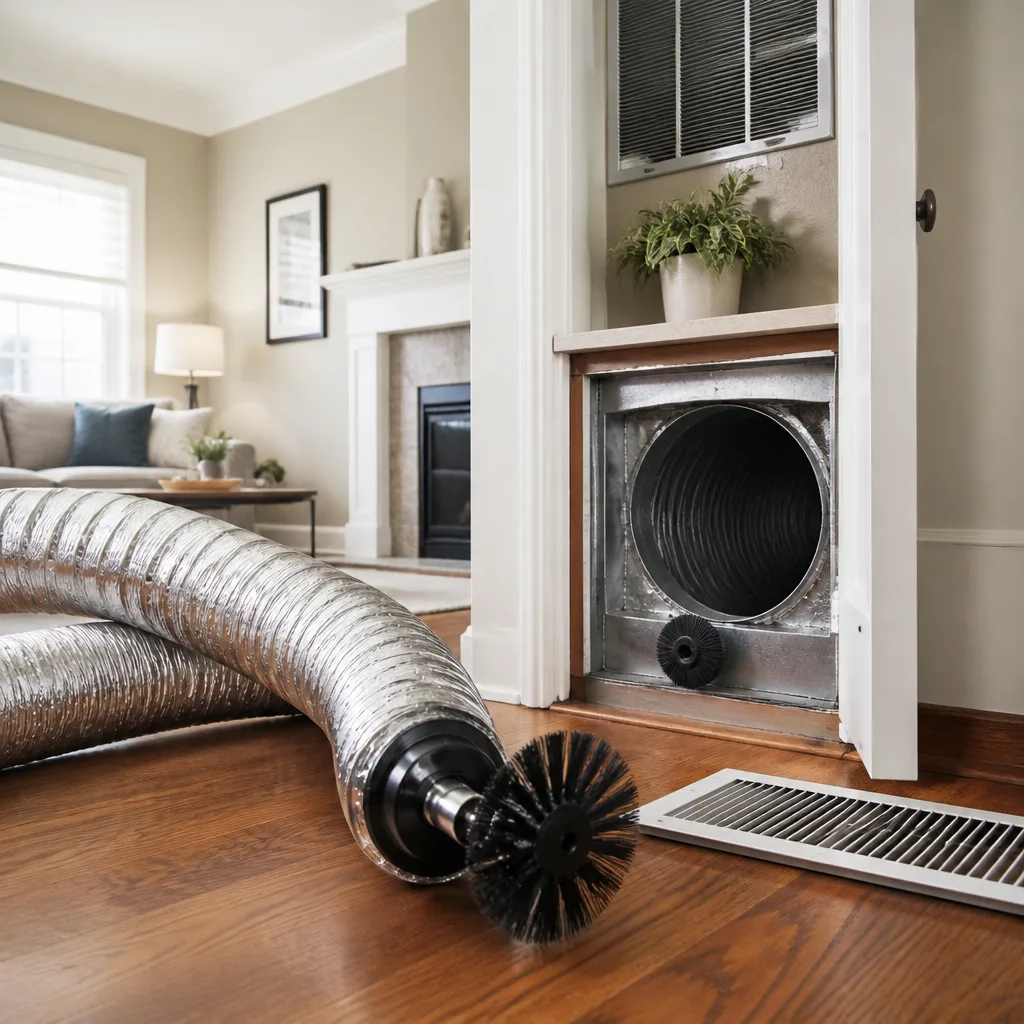 Whole-home duct cleaning
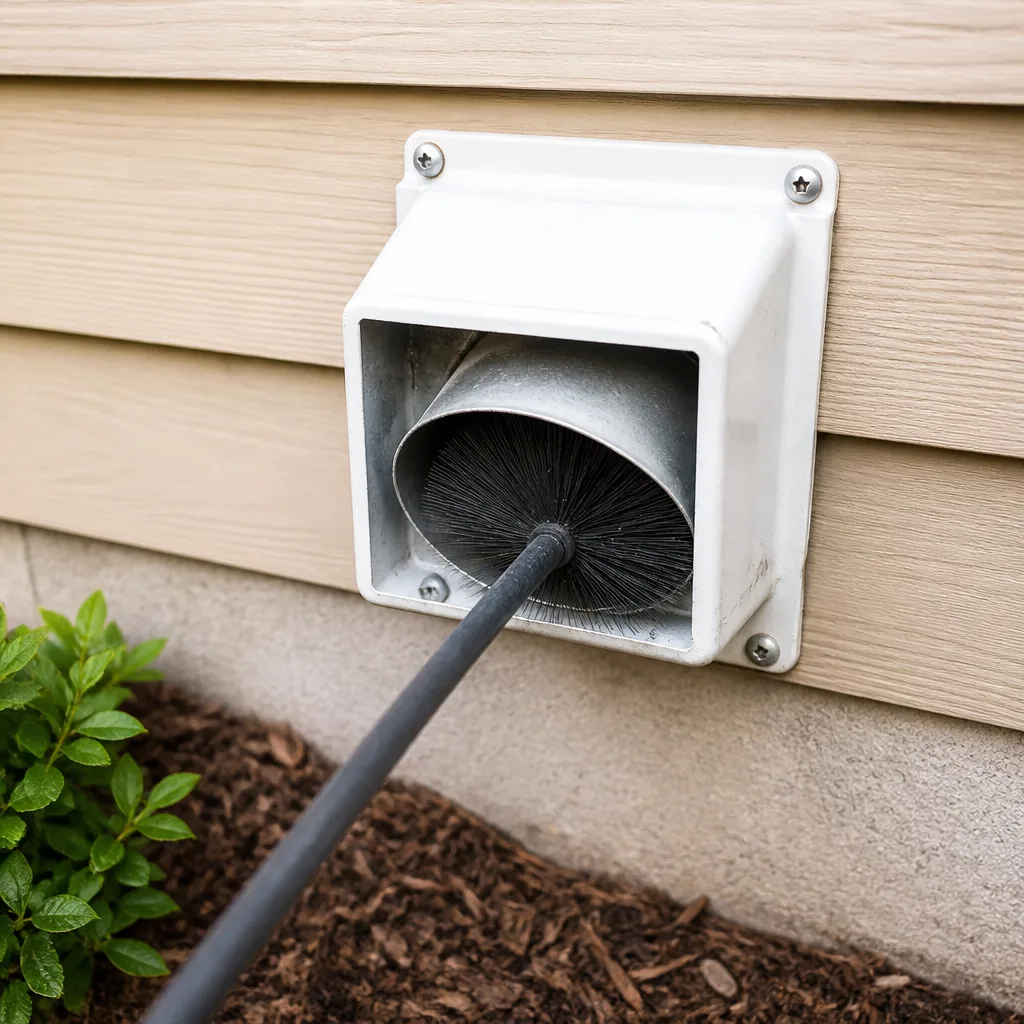 Dryer vent cleaning
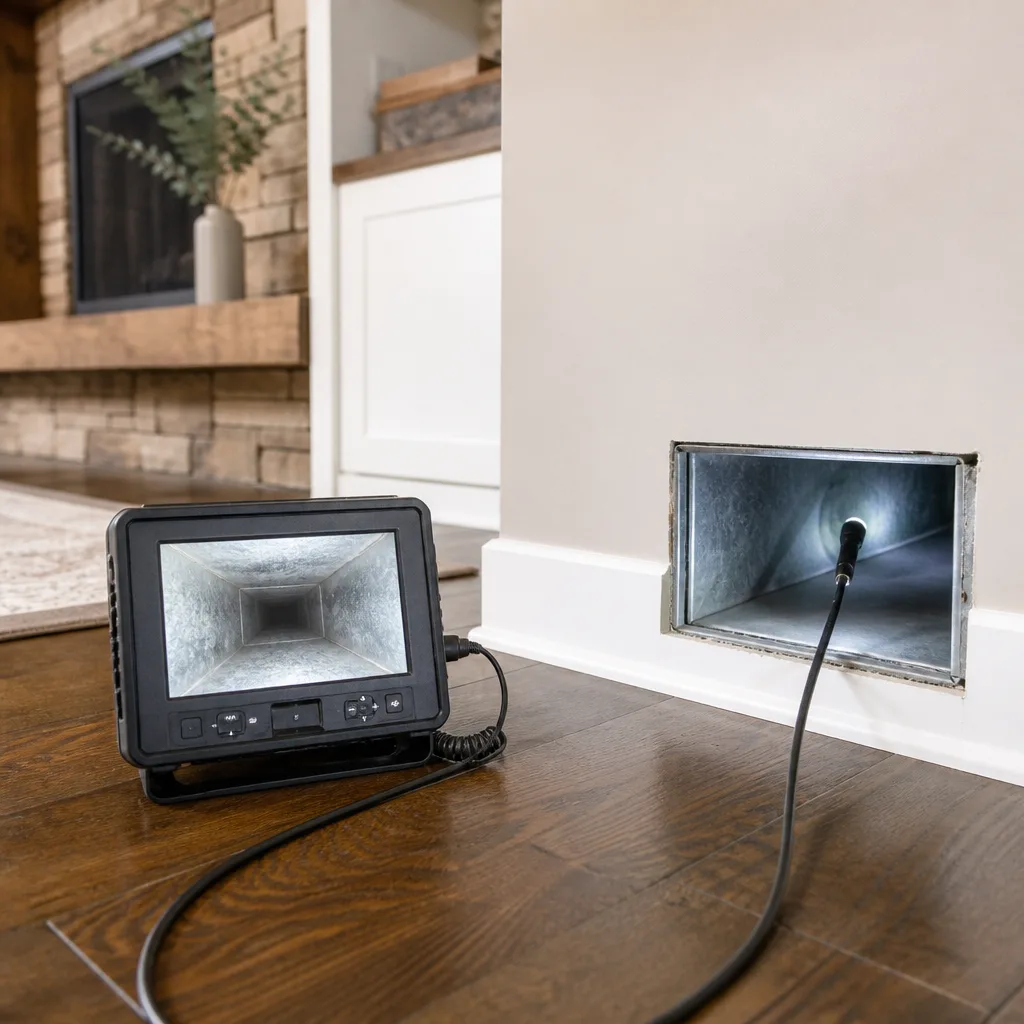 Camera inspection
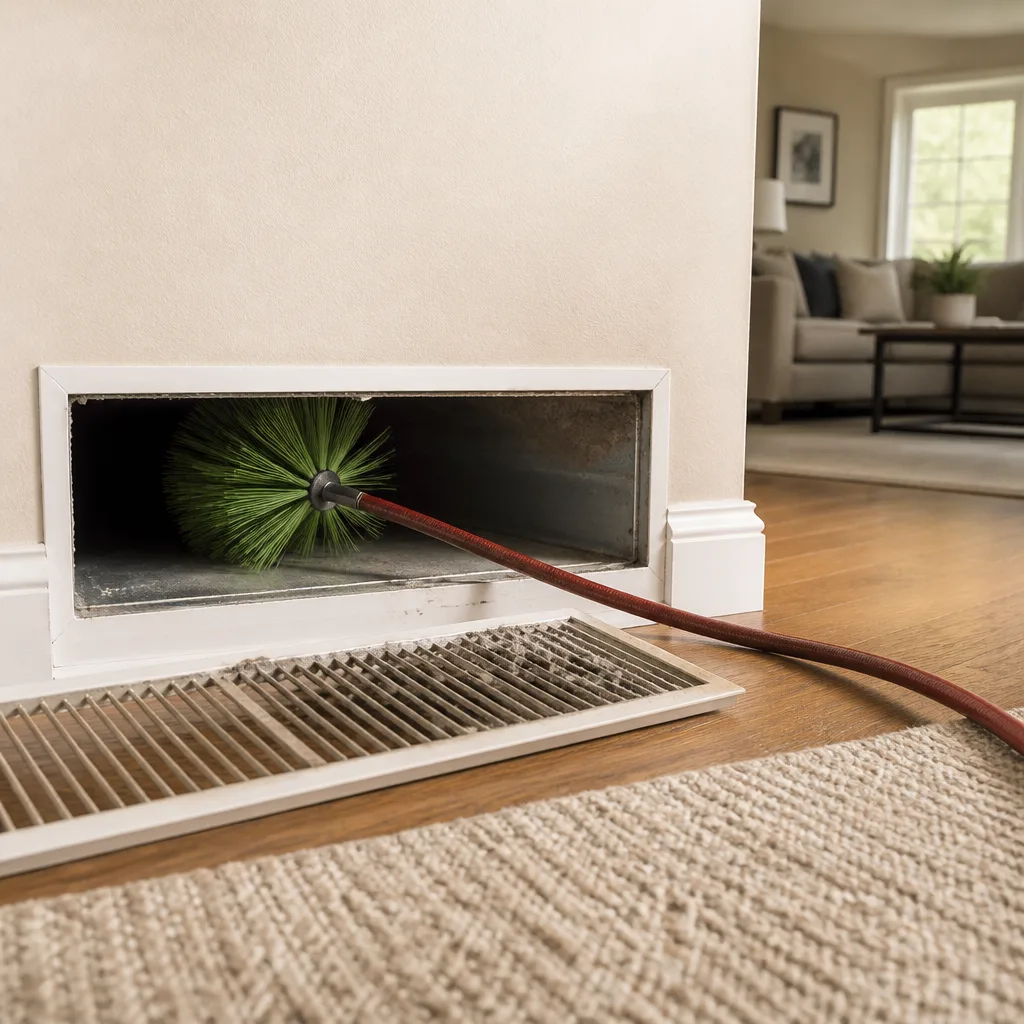 Sanitizing & deodorizing
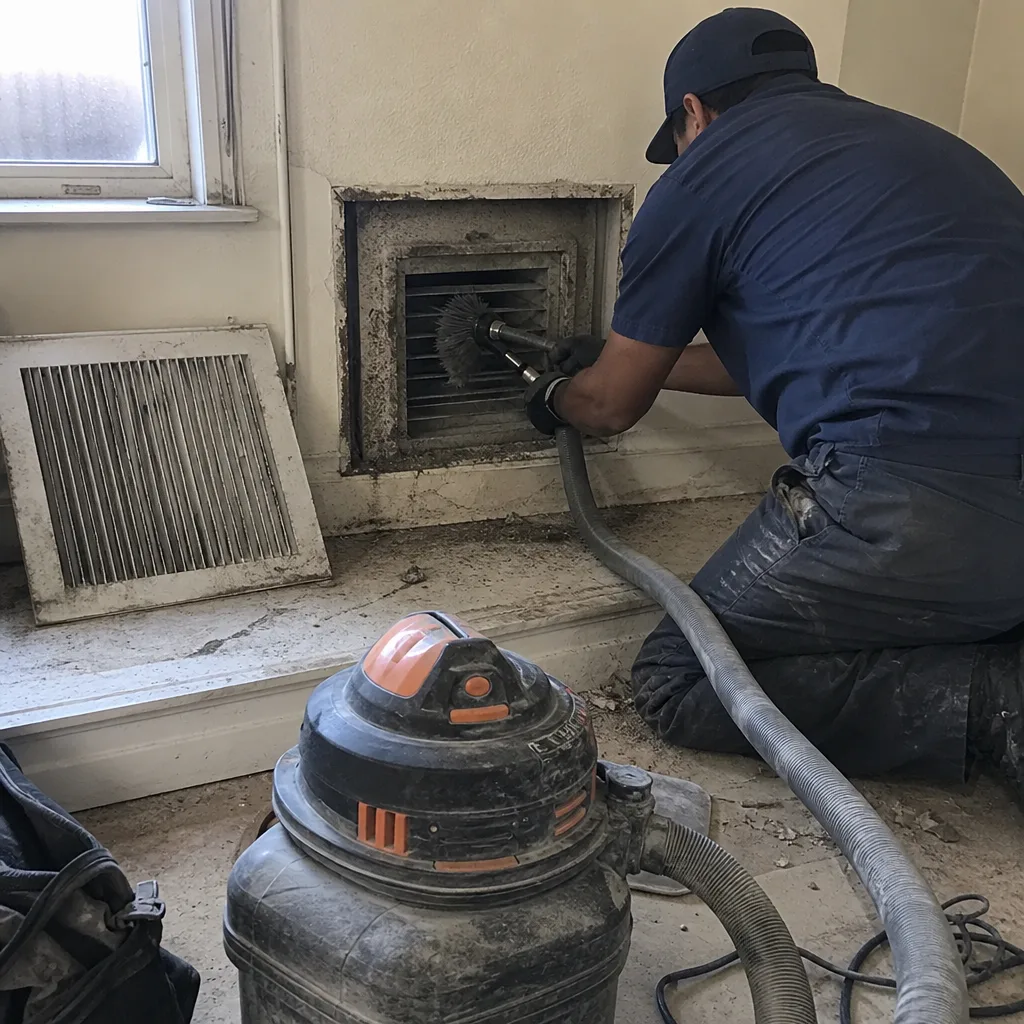
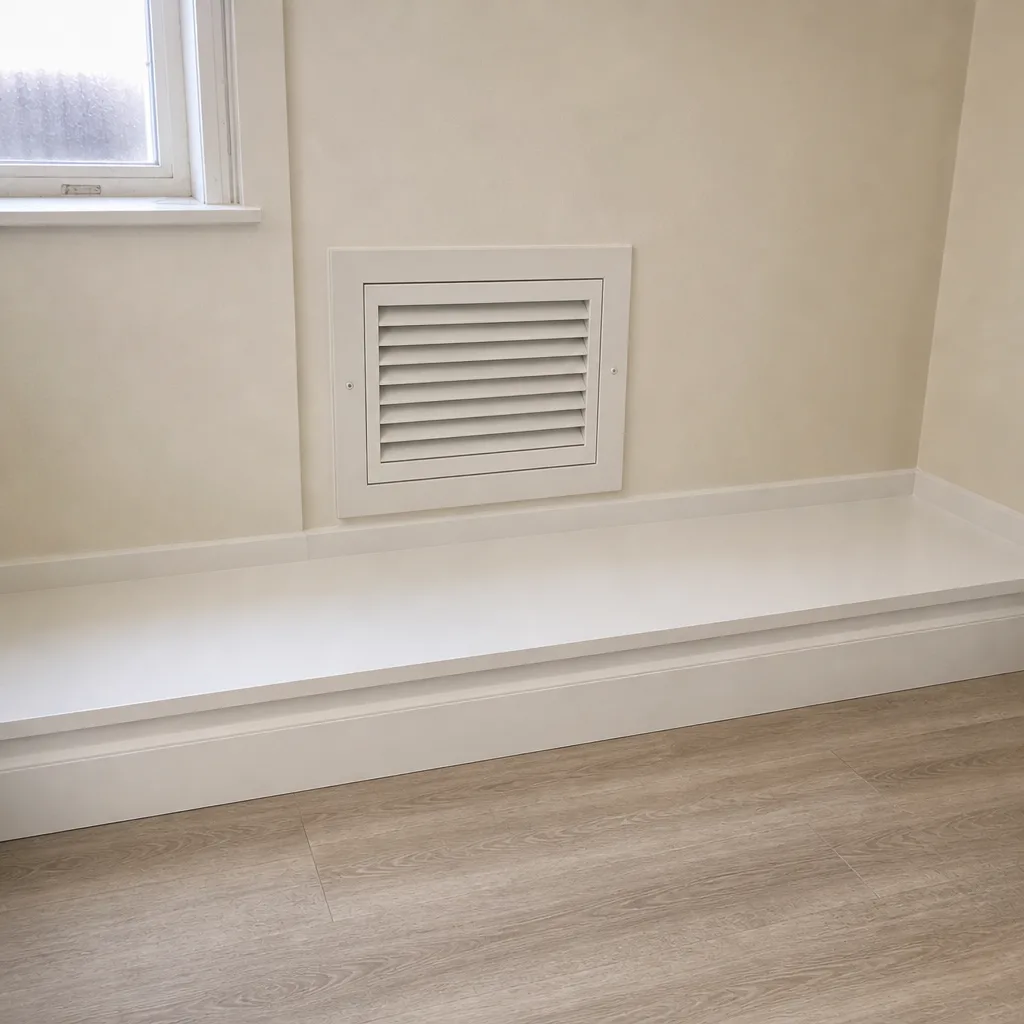
Whole-system duct and dryer vent check with before-and-after photos - you see exactly what came out of your vents
That "$99 whole-house special" is a bait ad - the real number appears once they are in your hallway, or the "clean" is a shop-vac at the register. We photograph the inside of your ducts before and after instead.
How to Hire an Air Duct Cleaning Contractor in West Valley City: A Step-by-Step Guide
Most homeowners assume the hardest part of duct cleaning is finding someone with the right equipment. It’s the opposite. In Utah, duct cleaning carries no state licensing requirement, which means the barrier to entry is essentially a van and a shop vac. Anyone can print “Air Duct Cleaning” on a business card and knock on your door in West Valley City. So the real work isn’t finding a contractor – it’s spotting the difference between an operator who understands airflow and one who just agitates the debris already sitting in your ducts. This guide walks you through the exact questions to ask, what acceptable answers sound like, and where the local market tends to hide its tricks.
Quick Answer
Hiring an air duct cleaning contractor in West Valley City means verifying equipment specifications, trade association membership, and how the quote is scoped – not just accepting the lowest bid. Ask for the vacuum collection unit’s CFM rating, the brush system type, and whether the company uses video inspection before and after the work. A legitimate quote lists every component being cleaned and the containment method used, in writing. If the answers are vague, keep looking.
Styles & brands we work with
- Whole-home duct cleaning
- Dryer vent cleaning
- Camera inspection
- Sanitizing & deodorizing
Table of Contents
- Why Hiring Right Matters More Here Than in Most Trades
- The Equipment Questions That Separate Real Operators From Pretenders
- Why NADCA Membership Matters – and How to Verify It
- Red Flags Specific to the West Valley City Market
- What a Properly Scoped Quote Should Include, Line by Line
- How to Evaluate Before-and-After Documentation as Real Proof
- Add-On Services: Informed Upsells vs. Predatory Ones
- The Step-by-Step Hiring Process
Why Hiring Right Matters More Here Than in Most Trades
When you hire an electrician in West Valley City, the State of Utah’s licensing board has already done a first pass on your behalf. Duct cleaning has no such board. There is no state exam, no continuing education requirement, no bond fund. What you get instead is a market where a legitimate operator running a Rotobrush system and a discount crew with a shop vac can both call themselves an “air duct cleaning contractor in West Valley City” with equal legal footing.
That gap matters more in this valley than it would in a coastal market. West Valley City sits in the Salt Lake Valley, where winter inversions trap cold air and fine particulates against the Oquirrh foothills for days. Homes here run their furnaces hard from late fall through early spring, pulling through the same ductwork day after day. Dry summer conditions also kick up dust that finds its way into return-air intakes. When the system is running constantly and the outdoor air is thick, the quality of the cleaning job – and the containment used during it – has a bigger footprint on what you actually breathe indoors.
What we’ve seen across jobs in neighborhoods from Hunter to Granger to Chesterfield is that the cheap operators don’t typically damage anything. They just do the minimum. A garden hose of air gets blown through the trunk line, a brush swipes the visible branch, and no containment is set up. The result is that the debris in your ducts is now distributed more evenly across your ducts. It looks like work was done. It wasn’t done right.
This guide is about closing that gap. By the end, you’ll know what to ask, what to listen for, and how to spot a good quote from a padded one – whether the conversation happens on the phone or at your front door.
The Equipment Questions That Separate Real Operators From Pretenders
Equipment isn’t a proxy for competence – it’s a prerequisite. A cleaning job is only as good as the air pressure pulling contaminants back to the vacuum source and the brush system that dislodges them in the first place. If a contractor can’t describe their own rig without shifting the subject, that’s the whole conversation right there.
Here are the questions to ask, and what acceptable answers sound like:
- “What’s the CFM rating of your vacuum collection unit?” CFM stands for cubic feet per minute – the actual air volume the vacuum pulls against the duct system. A legitimate professional unit runs in the high hundreds to a few thousand CFM range, and the operator should know the number off the top of their head. A consumer shop vac runs closer to 100-200 CFM and can’t create meaningful negative pressure in a duct trunk. If the answer is “it’s a strong one,” that’s not an answer.
- “Do you use a forward-pressure or reverse-pressure brush system?” These are two different cleaning approaches. The forward-pressure whip drives debris toward the vacuum collection point; the reverse-pressure version works from a different entry point. A real operator can explain which one they use for main trunk lines versus branch runs and why. If they don’t know the difference, they probably haven’t thought about it.
- “Do you do any video inspection before or after the work?” Video inspection is how a company actually confirms the ducts are clean – it’s the difference between a claim and a verification. Not every operator carries a camera, but the good ones do, and the good ones will offer it. Ask whether you can see what the camera shows.
- “What containment do you set up?” This is where the professional equipment really earns its keep. A cleaning job without negative-air containment is redistributing dust into your home. Abatement Technologies negative-air equipment is the same class of tool used in professional remediation – it captures the particulate as it’s dislodged rather than pushing it into the living space.
If you hear the equipment names Rotobrush and Nikro in the answer, that’s a good sign – both are professional-grade duct-cleaning systems with documented specs, not generic hardware store stock. And if you want a baseline on what a professional job actually looks like, our air duct cleaning page walks through the process step by step, from containment setup to camera verification.
Why NADCA Membership Matters – and How to Verify It
NADCA stands for the National Air Duct Cleaners Association. It’s the trade’s primary standards body, and there’s no government equivalent. A contractor who belongs to NADCA has at least agreed to a written set of practice standards and has access to certification testing for staff. That’s a meaningful signal, but it’s not the whole safety net – and understanding what membership does and doesn’t require is what separates a real reference check from a logo on a truck.
What NADCA membership typically requires of a company:
- A commitment to the association’s code of ethics, which covers honest pricing and refusing to use scare tactics.
- Access to the ACR Standard – the industry reference for how duct cleaning should be performed, including cleaning methods and verification.
- For specific staff, the option to sit for the ASCS (Air Systems Cleaning Specialist) certification exam.
What it does not do:
- Replace state licensing, because Utah doesn’t issue one for this trade.
- Guarantee a specific contractor on a specific day does the work correctly.
- Prevent a company from padding an invoice once they’re inside your home.
How to verify: search the company name on NADCA’s member directory directly, not through a link the contractor sends you. A membership certificate on a website is easy to reproduce. Directory verification is not. If the directory shows no match, the “member” framing is marketing copy, not a credential.
You should also expect to be able to ask politely for proof of insurance and get a certificate without pushback. In a market with no licensing requirement, protecting the customer is a habit, not a courtesy.
Red Flags Specific to the West Valley City Market
Utah’s duct cleaning market has a well-worn set of patterns, and they’re worth naming because they repeat. Homeowners along 3500 South and Redwood Road area neighborhoods tend to see these more than most, but no part of West Valley City is immune.
- Door-to-door offers with a coupon price. If someone knocks on your door and quotes a low number – a very low number – to clean the whole system today, the coupon is the hook, not the price. The real number appears after they’re inside. A legitimate company doesn’t recruit customers through door-knocking with a batch quote.
- “Per-vent” pricing. Vents are visible; trunk lines are not. A per-vent quote lets the contractor clean only what you can see, skip the trunk and plenum, and still charge you. A real quote is a flat price for the whole system, with every component listed.
- “Your ducts are dangerously contaminated” delivered at the door. Any claim about health risk made before a technician has looked at the actual system is a scare tactic. Real operators will tell you what they see when they see it, not before.
- No written scope before work begins. If the conversation starts with a quote on the phone and ends with a swiped card before any paperwork appears, the whole transaction is unchecked.
- Add-on pressure. Sanitizing, coil cleaning, sealing – each is a legitimate service in some jobs. Each is also an easy upsell when a contractor is paid on job size. If an add-on is pushed before the base job is even documented, treat the pitch as a warning sign.
- “We’ll be in the area tomorrow.” Legitimate scheduling doesn’t center on the company’s convenience. If the sales pitch is built around the crew already being nearby, it’s a batch job pattern, not a scheduled appointment.
The common thread across all six is speed and pressure. A good contractor will let you think about it. The ones who won’t are usually the ones with something to gain from not giving you the time.
What a Properly Scoped Quote Should Include, Line by Line
A quote from a legitimate duct cleaning company in West Valley City is a document, not a number. Whether it’s written down or laid out in writing by email, you should be able to read it and understand exactly what’s included and what isn’t. Here’s what belongs on it:
- The scope of components. Every part of the system being cleaned is named – supply trunk lines, branch runs, return ducts, plenum, register boots. If a component is missing from the list, it’s not included in the price.
- The equipment being used. Vacuum collection unit and brush system named. If the contractor carries containment equipment, it’s listed. If they don’t use containment, that’s a red flag worth asking about.
- Access method. How the technician reaches inside the ductwork – through existing register openings, or via cuts into the trunk that will be resealed. Either approach is fine, but the customer should know which it is before work starts.
- A flat price, not a range. One number for the whole job as described. Not a per-vent total that “could grow,” not a “starting at” figure.
- Verification method. Camera inspection, before-and-after photos of the actual system, or both. If neither is listed, ask for it as a commitment on the quote.
- Add-ons priced separately and marked optional. Sanitizing treatment, coil cleaning, duct sealing – each priced on its own line, with no pressure to include it. A customer who declines every add-on should still get the full cleaning described in items 1-5.
What you should never see: a service-call fee stack, a “diagnostic charge,” a per-vent line, or a coupon figure that becomes a bigger number after the technician arrives. Our estimates are free, flat per job, and agreed before any work starts. Before-and-after photos of your own ducts are standard – not a favor you have to ask for.
For a comparison point, our dryer vent cleaning page shows how the same flat-pricing principle applies to a smaller, single-appliance job. Different scope, same discipline.
How to Evaluate Before-and-After Documentation as Real Proof
Before-and-after photos are the first piece of leverage you have as a customer, and they’re also the easiest thing for a bad operator to fake. A photo of a dirty brush doesn’t prove anything – it proves that a brush existed and was dirty. What you want is photographic evidence tied to specific points in your own system.
Here’s how to read the photos as proof:
- Same location, both photos. A proper before-and-after shows the same point in the duct (usually a trunk line just past the plenum, or the deepest branch on a run). Different angles of different spots tell you nothing.
- Visible landmarks match. The register boot, the plenum connection, the line where the branch meets the trunk – these should be identifiable in both photos. If the “before” photo shows your duct and the “after” photo shows something that looks like a showroom duct, you’re being handled.
- Video inspection, if offered. A camera down the trunk is the real verification. Ask for the footage, or the still frames pulled from it. Operators who carry cameras are typically the ones who assume you’ll ask.
- Photos taken during, not just after. The before photo should be taken with the system still in its uncleaned state; the after photo should be taken from the same access point after the brush and vacuum have done their pass. If both photos were taken at the end of the job, the “before” was staged.
Our approach on every job is to take before-and-after photos of your own ducts at the same access points, so you don’t have to guess whether the work happened. That’s the standard we’d want a contractor meeting before we let them touch our system, and it’s the standard we hold ourselves to.
If a contractor pushes back on the request for photos or camera footage, that’s your answer. Move on.
Add-On Services: Informed Upsells vs. Predatory Ones
Legitimate add-on services in this trade exist because not every home needs the same scope. A house with cats and a humid winter needs different treatment than a new build with no pets. The question isn’t “should there be add-ons” – it’s “which ones does this home actually need, and who’s deciding.”
Here’s how to separate informed from predatory:
- Sanitizing. A legitimate antimicrobial treatment – Guardsman products are a common professional line – is applied to the duct interiors after cleaning, not instead of cleaning. If a contractor is willing to sanitize without cleaning first, the sanitizer is just covering contamination. Ask whether sanitizing is included in the base job or an add-on, and decline if you’re not sure it’s needed. It’s your call, not theirs.
- Coil cleaning. The evaporator coil on your HVAC system is a real surface that collects debris, and cleaning it is a real service. But it’s separate from duct cleaning and should be priced as its own line item. If a contractor bundles “coil cleaning” into a duct cleaning quote without explaining it, ask for the price broken out – if the number changes, the bundling wasn’t a gift.
- Duct repair and sealing. This is the add-on most worth taking if it’s warranted. Sealing a leaking duct joint or repairing a disconnected run doesn’t just stop air loss – it stops the pathway that lets contaminants back into your system after it’s been cleaned. A company that only cleans and never repairs is missing half the job. Our HVAC cleaning service includes the repair-and-seal piece because cleaning a leaking system is cleaning a system that will get dirty again faster.
- Filtration and air quality upgrades. If a contractor pitches a specific filter upgrade or air treatment system, ask whether they carry the brand as an authorized dealer or just resell whatever’s on hand. Honeywell and Aprilaire products are legitimate, widely installed lines – a contractor working with those brands can talk you through specifications and fit. A generic pitch with no brand attached is a pitch, not a recommendation.
The test is simple. Ask why the recommendation applies to your system specifically. If the “why” is a general statement about ducts, it’s a sales script. If the why is a specific observation about your return line, your coil, or your register boots, it’s a recommendation.
The Step-by-Step Hiring Process
Here’s the whole process in order. It takes about 30 minutes of your time before you start calling, and it saves you from almost every trap in the market.
- Start with the equipment question. Call and ask for the CFM rating of the vacuum collection unit and the brush system type. If the answer takes more than a beat, you’ve already learned something. Take notes.
- Ask whether the company is a NADCA member and check the directory yourself. Five seconds of searching the member directory prevents a brochure full of empty claims.
- Request a written quote before any work is scheduled. Ask for the scope to list every component being cleaned and for the total price to be flat, not per-vent.
- Confirm containment. Ask what negative-air equipment they use during cleaning. If nothing, ask what their plan is to keep dust out of your living space. There should be a specific answer.
- Confirm photo or video verification is included at no extra charge. “Before and after photos” should mean the same access points in your own ducts, not a stock image.
- Ask which add-ons apply to your home, line by line, with prices. Sanitizing, sealing, coil cleaning, filtration – not on the quote at all, or priced on their own line. Decline any add-on you don’t want without consequence to the base job.
- Confirm the number matches the paperwork when the technician arrives. The price on the written estimate is the price you pay. If it changes at the door, stop.
One extra layer for West Valley City homeowners with older housing stock: ask whether the contractor ever finds disconnected or crushed duct runs and whether they can repair them. Original systems in neighborhoods built decades ago often have runs that have shifted or joints that have worked loose. Cleaning one of those without repairing it is one step forward and one step back. For a full walk-through of the interconnected system, our West Valley City air duct cleaning page covers how duct, dryer vent, and HVAC cleaning fit together – and you can see the whole scope in one place.
Common Mistakes to Avoid
- Hiring on price alone. The lowest bid in this market is almost always the bid with the smallest scope. The lowest per-vent quote you’ll hear in West Valley City usually turns out to cover only the visible vents and skip the trunk lines entirely.
- Accepting a door-to-door quote on the spot. A batch crew in the neighborhood quoting a coupon price is not the same as a company you scheduled and researched. The convenience is the trap.
- Skipping the containment question. Cleaning without containment pushes debris into the house, not out of it. If your house is on the western side of the valley and you get the cold inversion air pooling against the Oquirrhs, that indoor redistribution is the last thing you want.
- Treating before-and-after photos as proof without checking the locations. A photo of a brush tells you nothing. A photo of the same trunk line before and after is the only photo that matters.
- Assuming “sanitized” means “cleaned.” Sanitizing a dirty system just covers the dirt. Cleaning first, then sanitizing is the order that actually works. If a company reverses it, ask why.
- Not asking about duct repair and sealing. In a market where nobody’s checking on the trade, the biggest tell of a thorough operator is whether they carry the capability to fix what they find. Cleaning without repair is half the job.
- Not putting the price in writing before work starts. Phone quote, verbal agreement, and a swipe at the door – that’s the setup for a surprise invoice. The written estimate is the whole point.
See the difference
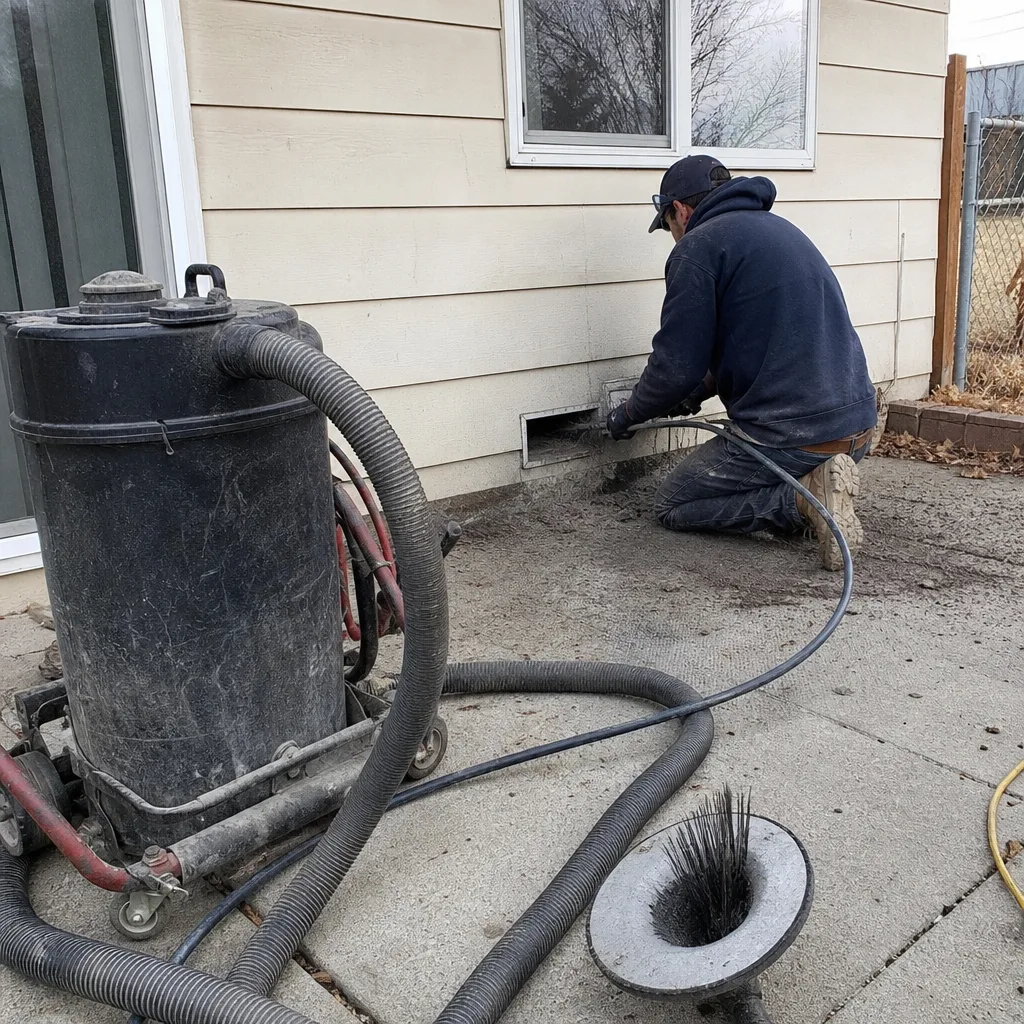 Before
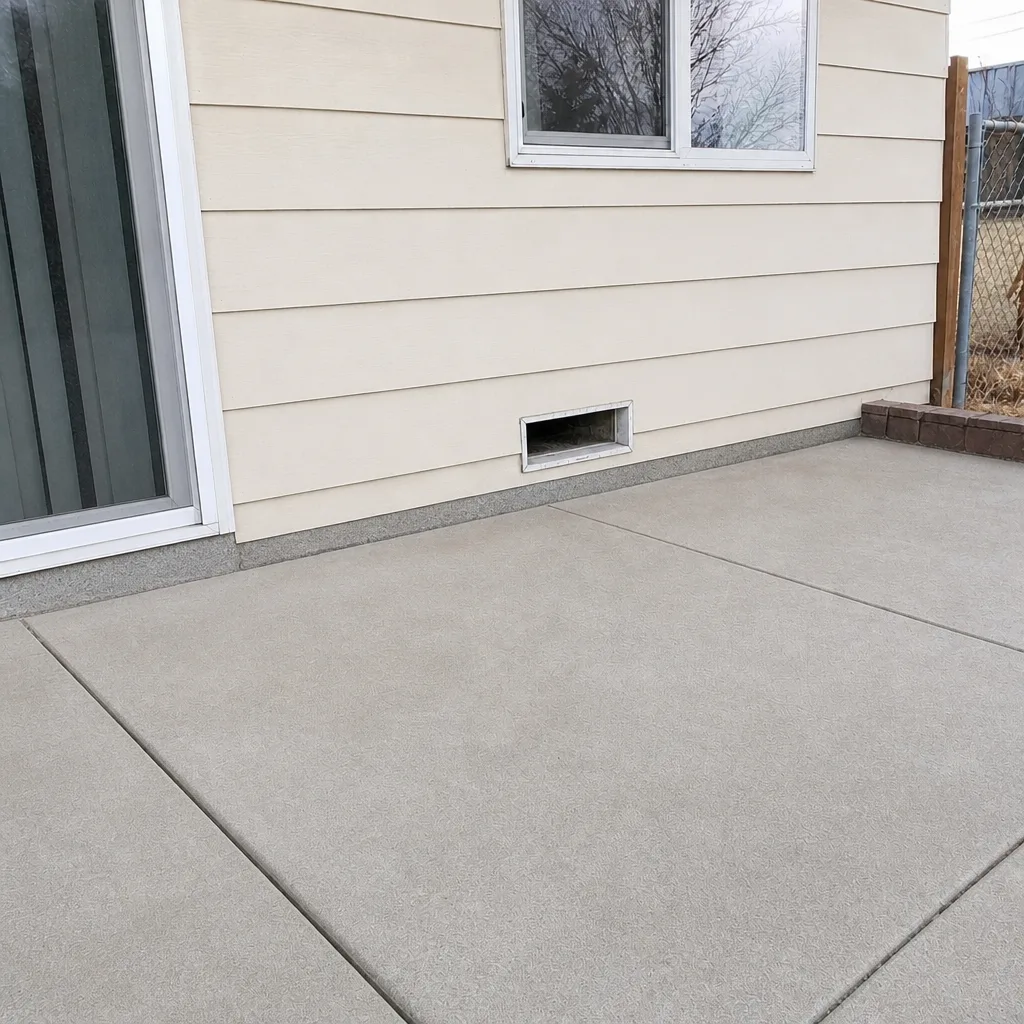 After
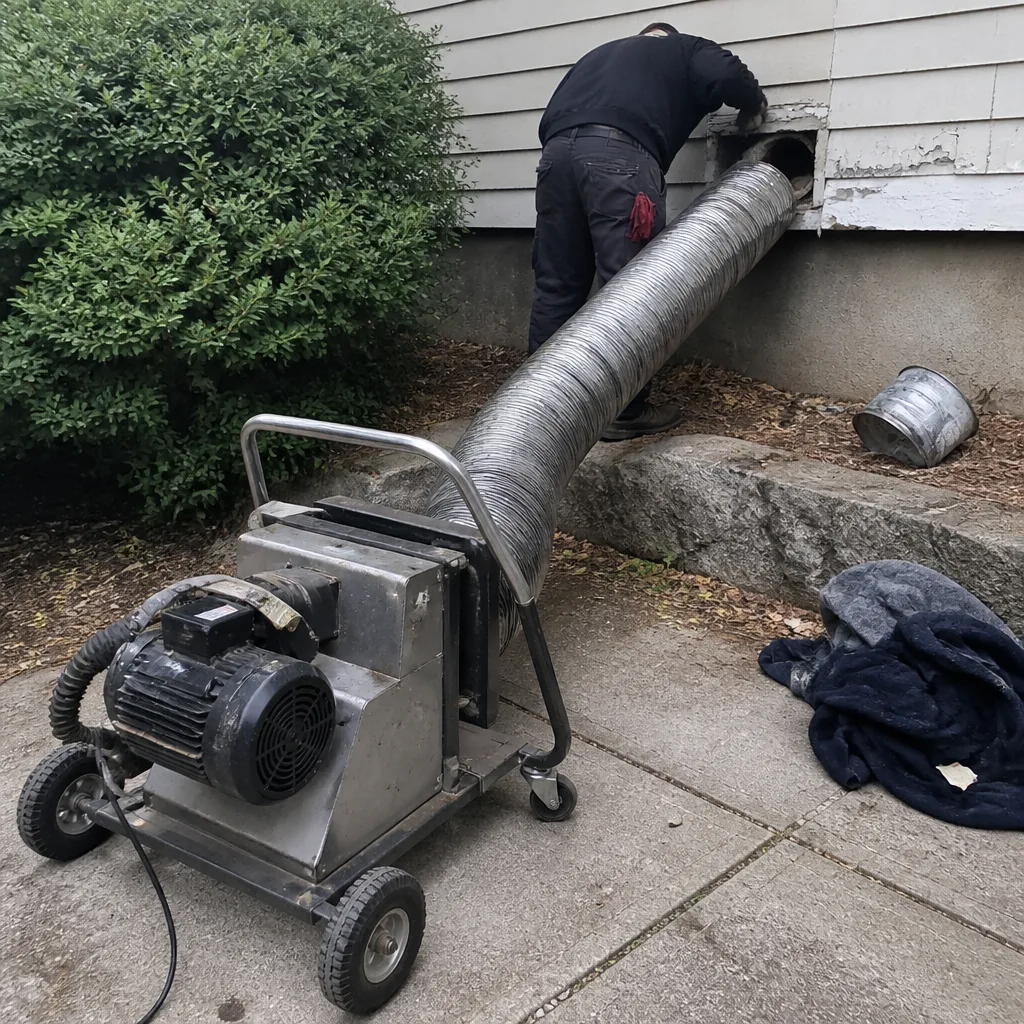 Before
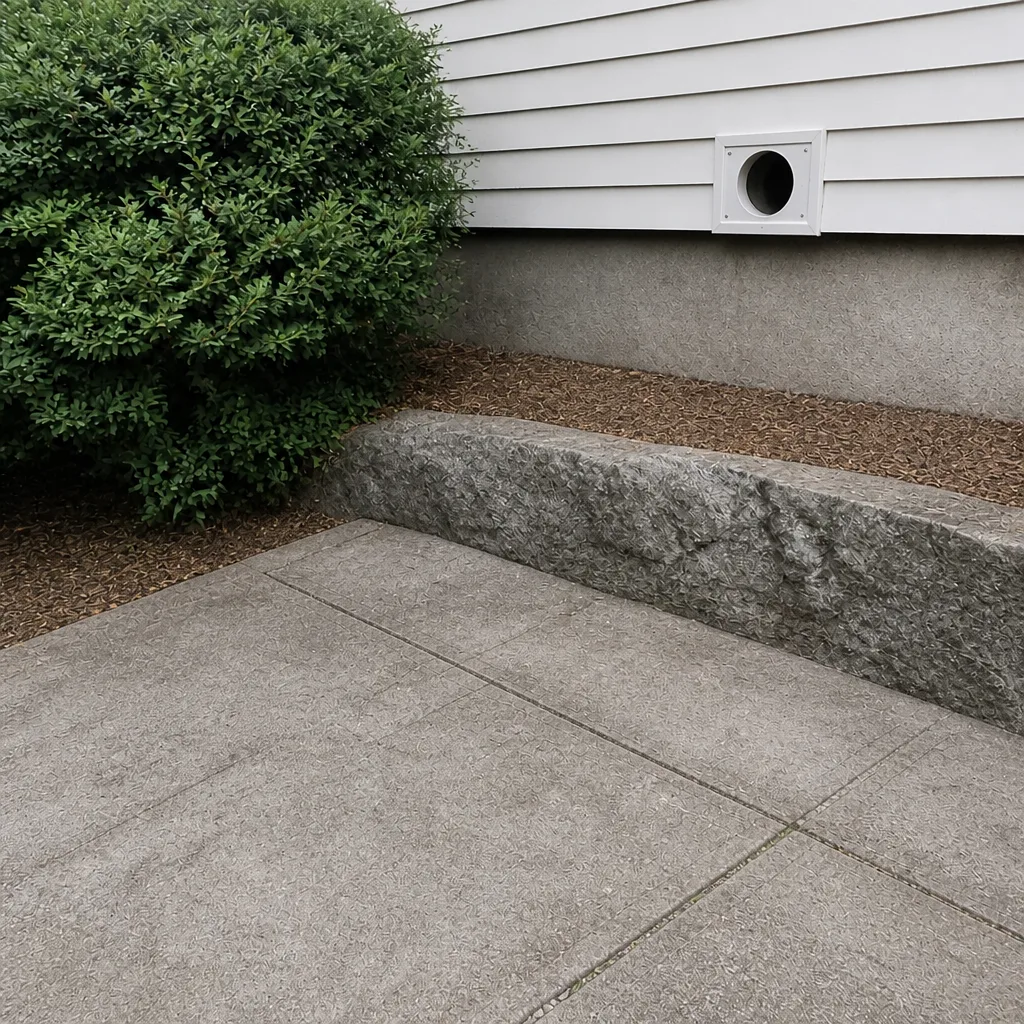 After
 Before
 After
When to Call a Professional
Duct cleaning isn’t a routine annual service for every home. In West Valley City, the cases where it’s genuinely warranted tend to fall into a few specific categories: recent renovations or drywall work in the house, a new pet moving in, older ductwork (especially original runs in houses built before the 1990s) that hasn’t been checked, visible dust streaks at return grilles, or allergy symptoms that persist indoors even when the windows are closed. Mould concerns, HVAC performance problems, or a dryer that’s taking noticeably longer to dry a load are all reasons to call and get an assessment. If you’re not sure whether your situation fits, it’s better to call and ask than to guess. West Valley City Air Duct Cleaning offers free estimates in West Valley City – call (844) 443-4789. We answer 24/7. Fast dispatch from 7am to 7pm, Sunday through Friday.
Frequently Asked Questions
The most reliable check is equipment literacy. Ask for the CFM rating of their vacuum collection unit and the brush system type. A legitimate operator answers specifically and quickly; a bad one gives you a generic line about “strong suction.” Add a NADCA directory lookup and a written quote with a flat price before scheduling, and you’ve filtered out most of the problem operators in the local market. If you want to talk through a specific situation, call (844) 443-4789 for an exact quote – estimates are free.
Ask two things: the CFM of the vacuum collection unit and whether they use a forward-pressure or reverse-pressure brush system. Professional units are in a completely different range from consumer shop vacs and can create the negative pressure needed to pull contaminants back to the collection point. If they can’t tell you their brush type, they haven’t thought about how the cleaning actually works. Call (844) 443-4789 for an exact quote – estimates are free.
It’s meaningful but not sufficient on its own. NADCA requires members to adhere to a code of ethics and has access to the ACR Standard for duct cleaning practice. It doesn’t replace state licensing, which Utah doesn’t issue for this trade. Verify a claimed membership directly in NADCA’s online member directory rather than through the contractor’s website. Call (844) 443-4789 for an exact quote – estimates are free.
Lower quotes in this market almost always mean a smaller scope – per-vent pricing that cleans only the visible vents, no containment, no camera verification, no duct repair capability. The price isn’t a discount on the same job; it’s a different (smaller) job with the same marketing. Call (844) 443-4789 for an exact quote – estimates are free.
Most homes don’t need annual duct cleaning – every few years is typically enough for a clean, well-maintained system. Homes in West Valley City with recent renovations, pets, allergy concerns, or older ductwork may warrant more frequent attention. Call (844) 443-4789 for an exact quote – estimates are free.
Before-and-after photos and video inspection conducted at the same access points in your own ducts. A photo of a dirty brush proves nothing; a camera shot of the same trunk line before and after is the real verification. Ask for that documentation as part of the estimate before the work is scheduled. Call (844) 443-4789 for an exact quote – estimates are free.
We’re closed on Saturday. Call and we’ll book you into the next opening, Sunday through Friday, 7am to 7pm. We answer 24/7, so leaving a message is never necessary.
Cleaning removes accumulated debris; sealing closes leaks and disconnected joints that let contaminants back into the system. Cleaning without sealing on a leaking system means it gets dirty again faster. Our technicians have up to 9 years of experience and use Nikro and Rotobrush cleaning systems; the sealing piece is built into the same job when it’s warranted. Call (844) 443-4789 for an exact quote – estimates are free.
The Bottom Line
In a market with no licensing requirement, hiring a duct cleaning contractor in West Valley City is really a matter of reading people and reading documentation. Ask the equipment questions, verify NADCA membership instead of trusting the logo, insist on a flat-price written scope, and require before-and-after photos of your own ductwork. Refuse per-vent pricing and door-knock offers. Ask about duct repair and sealing – the good operators have it. If you’re ready to compare a quote, West Valley City Air Duct Cleaning runs Rotobrush and Nikro cleaning systems and Abatement Technologies containment on every job, with Honeywell and Aprilaire filtration options when they fit. Call (844) 443-4789 for a free estimate. We answer 24/7. Fast dispatch from 7am to 7pm, Sunday through Friday.
Written by the team at West Valley City Air Duct Cleaning.