
Last updated November 24, 2026
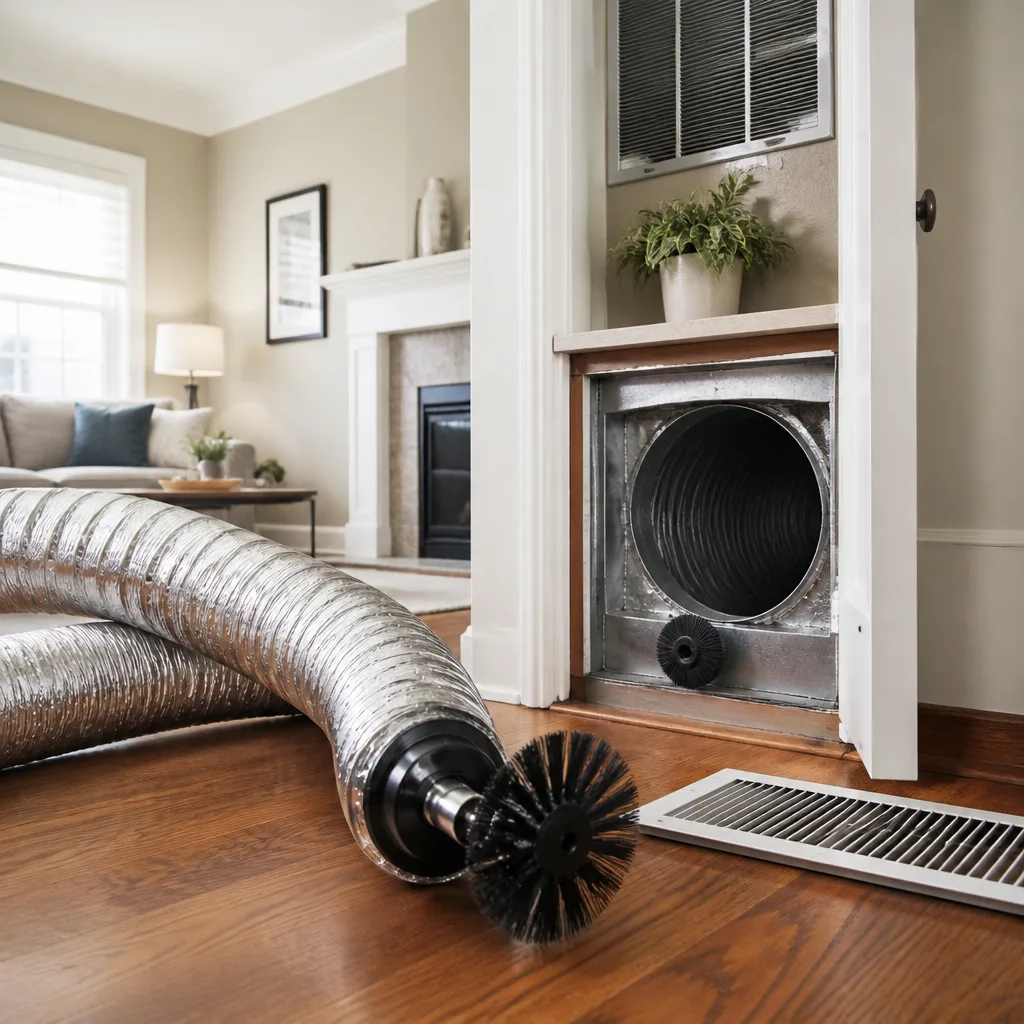 Whole-home duct cleaning
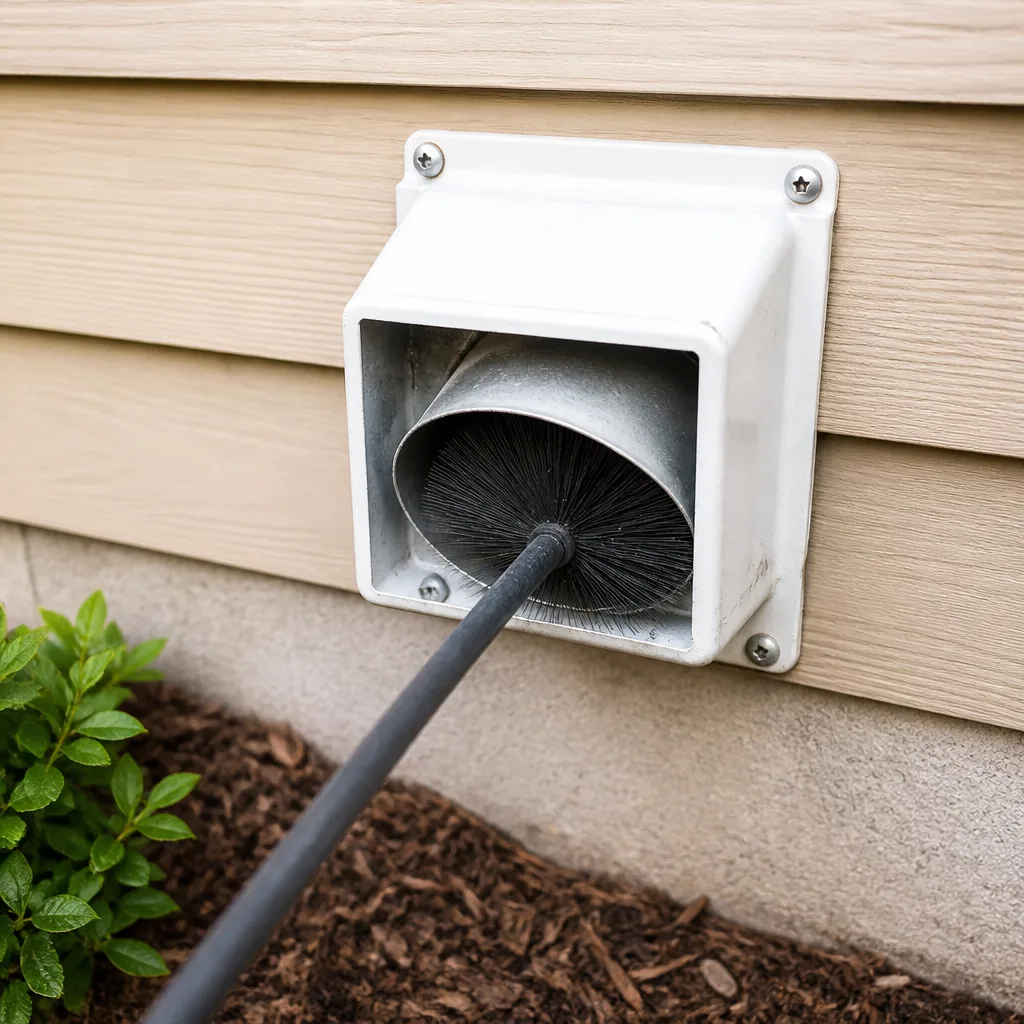 Dryer vent cleaning
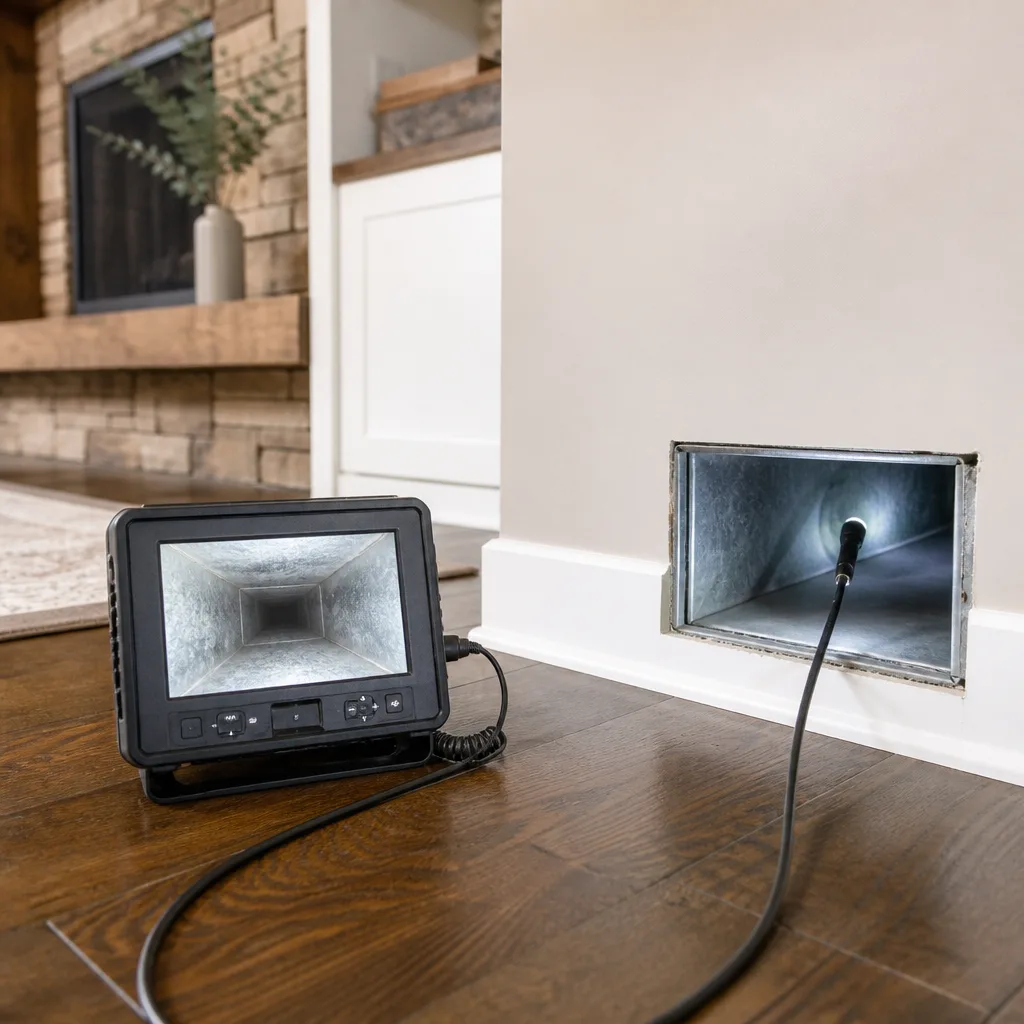 Camera inspection
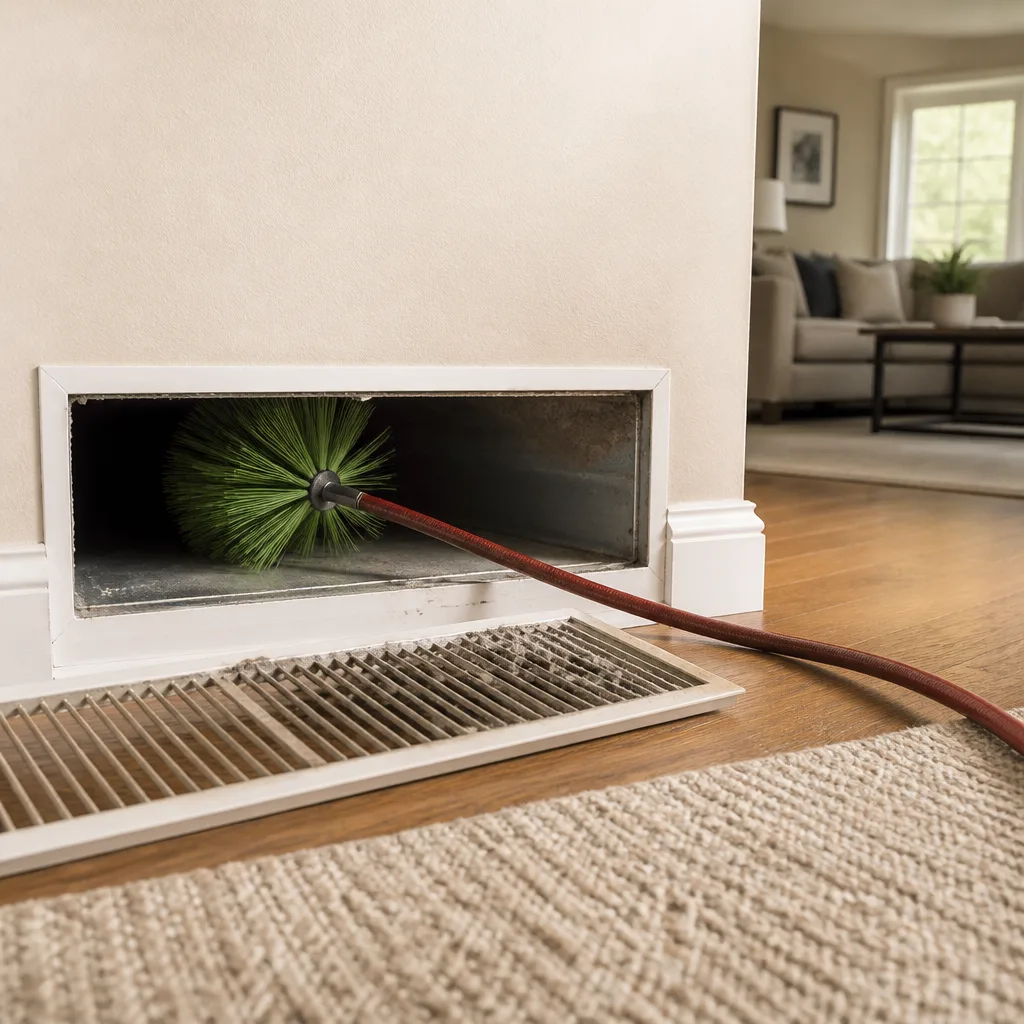 Sanitizing & deodorizing
Whole-system duct and dryer vent check with before-and-after photos - you see exactly what came out of your vents
That "$99 whole-house special" is a bait ad - the real number appears once they are in your hallway, or the "clean" is a shop-vac at the register. We photograph the inside of your ducts before and after instead.
Air Duct Cleaning Maintenance Checklist for West Valley City Homeowners
Changing your filter on schedule is good. Knowing that your filter’s MERV rating is probably mismatched to what your blower motor can actually handle, and that the mismatch quietly packs secondary filter media into your coil fins, is the checklist item almost nobody hands you. A maintenance checklist for ducts isn’t a cleaning reminder schedule. It’s a diagnostic calendar. West Valley City sits in a bowl where winter inversion traps fine particulate for weeks at a time, where summer dust rides in off the Oquirrh foothills, and where wildfire smoke from farther west settles in during the cooling season. Each of those events leaves a signature in your ductwork. What follows is the schedule we’d give a neighbor, tied to the actual seasonal stressors here, so you catch problems at the duct level before they reach expensive equipment downstream.
Quick Answer
A workable air duct maintenance checklist for a West Valley City home has four fixed checkpoints each year: a pre-inversion inspection in late fall, a post-inversion filter and register check in early spring, a pre-summer cooling startup that includes a visual duct and coil inspection, and a post-wildfire-smoke response whenever a smoke event ends. In between, you track airflow room by room and replace filters based on measured pressure, not a calendar sticker. The full-system professional cleaning itself usually lands every three to five years, sooner in homes with pets, recent renovation, or heavy inversion exposure.
Styles & brands we work with
- Whole-home duct cleaning
- Dryer vent cleaning
- Camera inspection
- Sanitizing & deodorizing
Table of Contents
- Why a West Valley City Calendar Beats a Generic Reminder
- The Four Seasonal Checkpoints
- What You Can Inspect Yourself at Registers and Joints
- Filter Selection by Home Age and Duct Configuration
- Tracking Airflow Room by Room
- DIY Versus Call-a-Pro: Specific Thresholds
- When Professional Service Makes Sense
Why a West Valley City Calendar Beats a Generic Reminder
Most duct maintenance advice assumes a mild, humid climate where the enemy is biological growth. West Valley City doesn’t work that way. The dominant stressors here are dry particulate and episodic smoke, both of which behave differently than mold or mildew. Fine dust in a dry climate stays airborne longer and settles deeper into return trunks. Winter inversion events trap that dust along with combustion particulate from vehicles and wood burning under a temperature cap that can hold for days. When the cap finally lifts, the material has to go somewhere, and a portion of it ends up in your return system and filter.
That gives you a genuine reason to time maintenance rather than just repeat it. Pre-inversion, you want the system clean and the filter fresh before the trap sets in, because you’ll be recirculating whatever is already inside the ducts for weeks. Post-inversion, you want to check what the filter caught and whether any of it bypassed the filter frame. Pre-summer, you want the cooling side inspected before it runs hard. Post-smoke, you want to know whether the smoke pulled through the return and how the filter held up.
We’ve seen this pattern repeat across West Valley City neighborhoods from Hunter to West Valley City’s older east-side homes near the Granger area. The homes with a calendar tied to local events stay ahead of the problem. The ones with a generic “clean every five years” reminder find out about duct deterioration only when the blower starts working harder or a room stops heating evenly. The specific services behind that calendar, from air duct cleaning to full-system inspection, exist to catch those problems at a point when they’re still cheap to fix.
The Four Seasonal Checkpoints
Four checkpoints a year is the practical minimum in West Valley City. Each one has a purpose and a small set of tasks. Run them as a numbered sequence so nothing gets skipped.
- Pre-inversion checkpoint (late October to early November). Replace the filter with the correct MERV rating for your blower. Vacuum each supply register face and the return grille. Check the return grille for dust streaking around the frame, which means air is bypassing the filter. Confirm the filter door seats and the filter frame is intact. This is the last good window to clean ducts before the inversion sets in.
- Post-inversion checkpoint (March, once the inversion has cleared). Pull the filter and look at what it caught. If the filter is uniformly dark, it did its job. If it’s dark in one band and clean elsewhere, airflow is concentrated, and that’s a sign of a restriction or a collapsing filter. Check return grilles for a fresh dust line. This is also the first checkpoint where duct deterioration shows up as visible grit at supply registers.
- Pre-summer cooling startup (May). Before you switch to cooling, do a visual inspection of the return plenum and the accessible duct joints. Look for tape peeling at joints, disconnected flex runs in the attic or crawlspace, and dust on the indoor coil face. If you can see the coil from the access port, check for a mat of dust on the fins. That mat is where the wrong MERV filter quietly does its damage.
- Post-wildfire-smoke checkpoint (any time a smoke event ends). Don’t assume the filter handled it. Smoke particles are small enough to load the filter fast and pull through the return trunk if the filter frame leaks. After a heavy smoke event, examine the filter for uniform loading, check registers for a fresh dust signature, and consider a duct inspection if the home smells smoky indoors after the outdoor air clears.
Between checkpoints, keep a simple log. Write the date of each filter change, the MERV rating you used, and one line about what you saw. It’s the single most useful thing you can hand a technician when a problem does show up.
What You Can Inspect Yourself at Registers and Joints
You can inspect more of your duct system than most homeowners realize, and it doesn’t require special tools. What you’re looking for at each location is a specific signature. Learning to read those signatures is what separates a useful checklist from a vague one.
Supply registers
Remove one register cover in the room that heats or cools the worst and shine a light inside. Dust that coats the interior uniformly is normal accumulation. A streak of dust that’s noticeably heavier on one side means airflow is entering the boot at an angle, usually because the run is undersized or the boot transitions poorly. Loose grit visible inside the boot, especially sand or fine dirt, is a sign of a joint failure somewhere upstream rather than ordinary dust.
Return grilles
The return grille should be dusty but not caked. A fresh line of dust traced around the grille frame means air is pulling through the frame rather than the filter, and it’s carrying dust into the return trunk. That line is the most common early warning of a filter that’s undersized for the slot or a gasket that’s failed. Fix the seal before the return trunk loads up.
Accessible duct joints
In an unfinished basement, garage, or attic access, you can see duct joints. What you’re looking for is foil tape that’s lifting, mastic that’s cracked, and flex duct that’s pulled loose from a collar. Peeling tape at a joint isn’t cosmetic. Air moves through it, and it moves unfiltered air into the system or conditioned air out. A disconnected flex run in the attic is worse, because it dumps conditioned air into the attic while pulling dust in behind it. In a dry climate with temperature swings, tape and mastic age faster, so this check matters more here than in a milder place.
Filter Selection by Home Age and Duct Configuration
The MERV rating on a filter tells you how fine a particle it captures. It doesn’t tell you whether your system can pull air through it. That’s the mismatch nobody warns new homeowners about. Every filter adds static pressure to the return side, and every blower has a limit. Put too fine a filter into an older furnace with a short return run and the blower starves for air. When it starves, the filter media warps and the coil face in front of the filter packs with the dust the filter was supposed to stop. That’s the trap behind the opening hook, and it’s worth getting right.
Match the filter to the home
- Older West Valley City homes with shallow filter slots and short return runs. Stay in the lower MERV range. A restrictive filter here may do more damage to static pressure than the extra filtration is worth. Check the furnace spec plate or the filter door labeling for the manufacturer’s recommended range.
- Homes with a dedicated media cabinet or deep filter slot. You have more headroom. A media cabinet holds a thicker filter, which gives you better filtration with less pressure rise. This is the configuration to lean into for households with allergy concerns.
- Homes with pets. Pet dander loads a filter quickly, so pick the highest MERV the blower can tolerate without starving, and change on observed pressure rather than the calendar.
- Homes with recent renovation. Drywall dust is punishing. Run a midrange filter during the remodel, change it as soon as active work ends, and treat the whole system to a professional cleaning rather than expecting the filter to handle construction dust alone.
Check the static pressure properly. If you don’t have a manometer, a technician with one will tell you in five minutes whether the filter you’re using is costing your blower. That one reading beats any filter marketing claim, and it’s the reason we don’t lead with MERV as a selling point. Where filtration upgrades go beyond the filter slot, we work with HVAC cleaning and filtration products from Honeywell and Aprilaire to match the media to the system.
Tracking Airflow Room by Room
Airflow balance is the cheapest diagnostic in the checklist, and almost nobody tracks it. The idea is simple. Every run in your duct system should deliver roughly what it was sized for, and any change in the balance of the house is an early warning of a duct problem. If you measure once and then measure again months later, you’re looking at a trend rather than a snapshot. That trend tells you what’s happening inside walls and attics you can’t easily see.
How to simply check airflow balance
- Pick a consistent time: same outdoor temperature, same number of interior doors open, same thermostat setting. Inconsistency defeats the measurement.
- Hold a piece of tissue or a lightweight strip at each return and supply register. Note whether it deflects strongly, weakly, or not at all.
- Record the result for each room on the same day, every season. You’re not looking for precision. You’re looking for change.
- If one room has fallen from strong flow to weak flow while others stayed the same, look first at the register and boot for an obstruction, then at the joint nearest that run. If a room has lost flow and the same run is now noisy, it’s restriction. If the run has lost flow and is quiet, it’s a break or a disconnected flex duct upstream.
A sudden weak return at one grille while others are normal is the classic sign of a collapsed flex duct or a blockage in the branch that serves that return. Neither one fixes itself. And a room that swings hot to cold relative to the rest of the house is often a duct problem, not a thermostat problem, even though it feels like one. We see this often in West Valley City homes with flex runs in attics where summer heat baking the duct is a real variable. If you find something in this check, getting ahead of a dryer vent cleaning alongside duct work also helps keep airflow paths in the whole house healthy.
DIY Versus Call a Pro: Specific Thresholds
Vague advice like “call us if you’re concerned” doesn’t help you decide. Here are the thresholds we’d give a neighbor. Below them, handle it yourself. At them, book the visit. The point of a threshold is to remove the guesswork so you don’t overpay for something small or wait too long on something that’s growing.
- Dust at a supply register you can vacuum off with a wand and see no grit inside the boot. DIY. Vacuum and record the date.
- Visible grit, sand, or construction debris inside a boot or visible duct interior. Call a pro. That debris indicates upstream failure and will not clear from vacuuming the register.
- One return grille with a fresh dust trace around the frame. DIY check the filter seat and gasket. If the trace returns after reseating, call a pro. The return trunk may need cleaning.
- Peeling tape or cracked mastic at one joint. DIY in accessible space only if the duct is easy to reach and the repair is straightforward. Anything in an attic, crawlspace, or above a finished ceiling is a pro job.
- Disconnected flex run anywhere. Pro. This is never a DIY repair because the reconnect has to be clamped and sealed correctly, and the surrounding duct interior almost certainly needs cleaning after.
- Persistent indoor smoke smell after an outdoor smoke event clears. Pro inspection. A filter change alone won’t clear what’s in the ductwork.
- Room-by-room airflow shows one room lost flow while others stayed the same. Pro inspection. Narrow it down first, then have the branch checked.
- Visible dust mat on the indoor coil fins. Pro. The coil face needs cleaning to restore airflow, and the filter selection should be re-evaluated with a static pressure reading.
If you get through the checklist and find two or more of the professional thresholds at once, you’re not looking at a cleaning. You’re looking at a system that needs the whole airflow chain checked, from the return trunk to the coil face.
When Professional Service Makes Sense
A checklist eventually tells you the ductwork is beyond what a homeowner can manage. That’s the moment a full-system service is worth the call, because duct cleaning done right is a process job. It uses professional-grade equipment, and the tools determine what actually happens to the dust. Our technicians use Rotobrush and Nikro contact-vacuum and negative-pressure systems, the type HVAC professionals run rather than the low-powered truck-mount rigs many discount operators bring. During cleaning we use Abatement Technologies negative-air containment equipment, the same tools remediation work relies on, so dislodged contaminant is captured rather than pushed into the living space. For homeowners who want it, we apply Guardsman sanitizing treatments to the duct interiors after cleaning.
What makes the difference in West Valley City isn’t just the cleaning. It’s that we treat duct repair and sealing as a core service rather than an upsell. When we find a joint that’s failed or a flex run pulled loose, we fix it. Cleaning without sealing just means the gap re-contaminates the system. That’s the whole point of running the checklist through the year: each item exists to catch a problem while it’s still a duct-level item and hasn’t reached the equipment.
Professional full-system cleaning is typically needed every three to five years in West Valley City, sooner in homes with pets, heavy inversion exposure, or recent renovation. Between cleanings, everything in the four checkpoint schedule above is yours to run.
Common Mistakes to Avoid
- Buying the highest MERV rating available. A filter your blower can’t pull through starves the system and pushes dust onto your coil fins. Match the filter to your system’s pressure tolerance, not to the number on the package.
- Vacuuming return grilles and calling it maintenance. The grille is the last thing dust touches before the return trunk. Cleaning the grille while leaving a loaded trunk in place only hides the problem.
- Treating a disconnected flex run in an attic as a small thing. In West Valley City attics that swing from cold to hot across the year, a loose run pulls unfiltered attic air and dust straight into the system. It’s a pro job.
- Ignoring a single return with a fresh dust line. That line is the earliest sign that air is bypassing the filter. Catch the seal before the return trunk loads, because it’s much cheaper to reseal than to clean.
- Skipping the post-inversion check because “the filter was just changed.” The filter change is the start of the inversion, not the end. The March filter inspection is what tells you how the system held up.
- Assuming indoor air smells like smoke because it’s a house problem. If outdoor air has cleared and the house still smells of smoke, the pollutants are in the ductwork or the filter hasn’t been replaced.
- Hiring a low-price duct cleaner without asking about equipment. Ask which cleaning systems they use and whether they run negative-air containment. If they can’t describe the process, they aren’t running a full-system clean.
See the difference
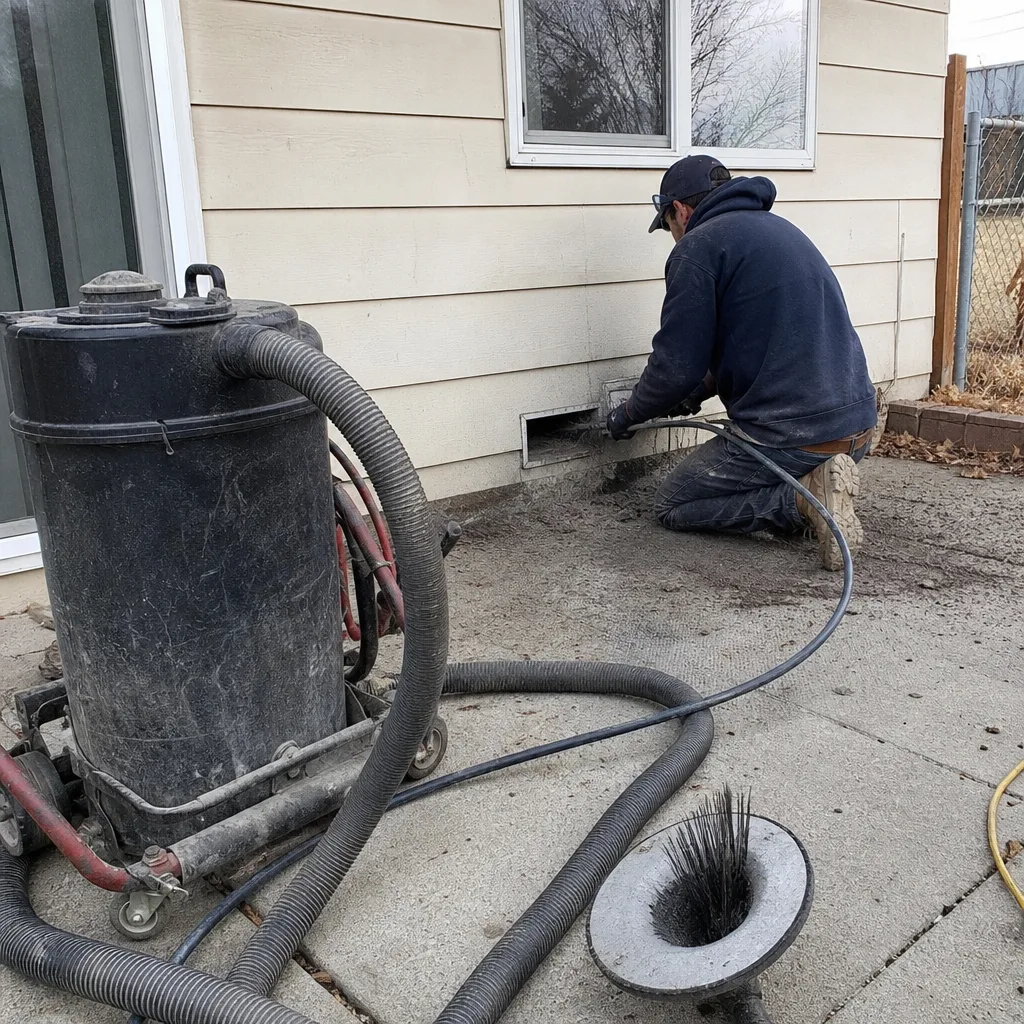 Before
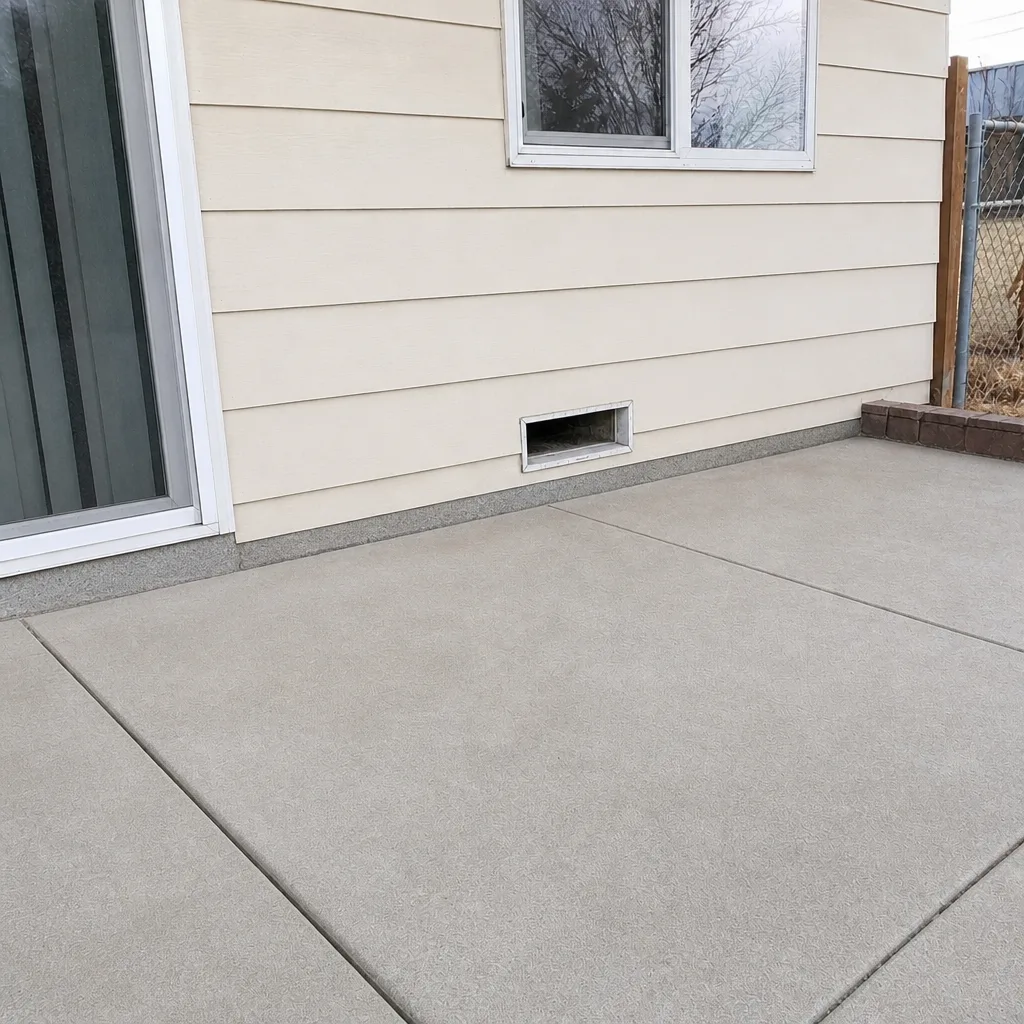 After
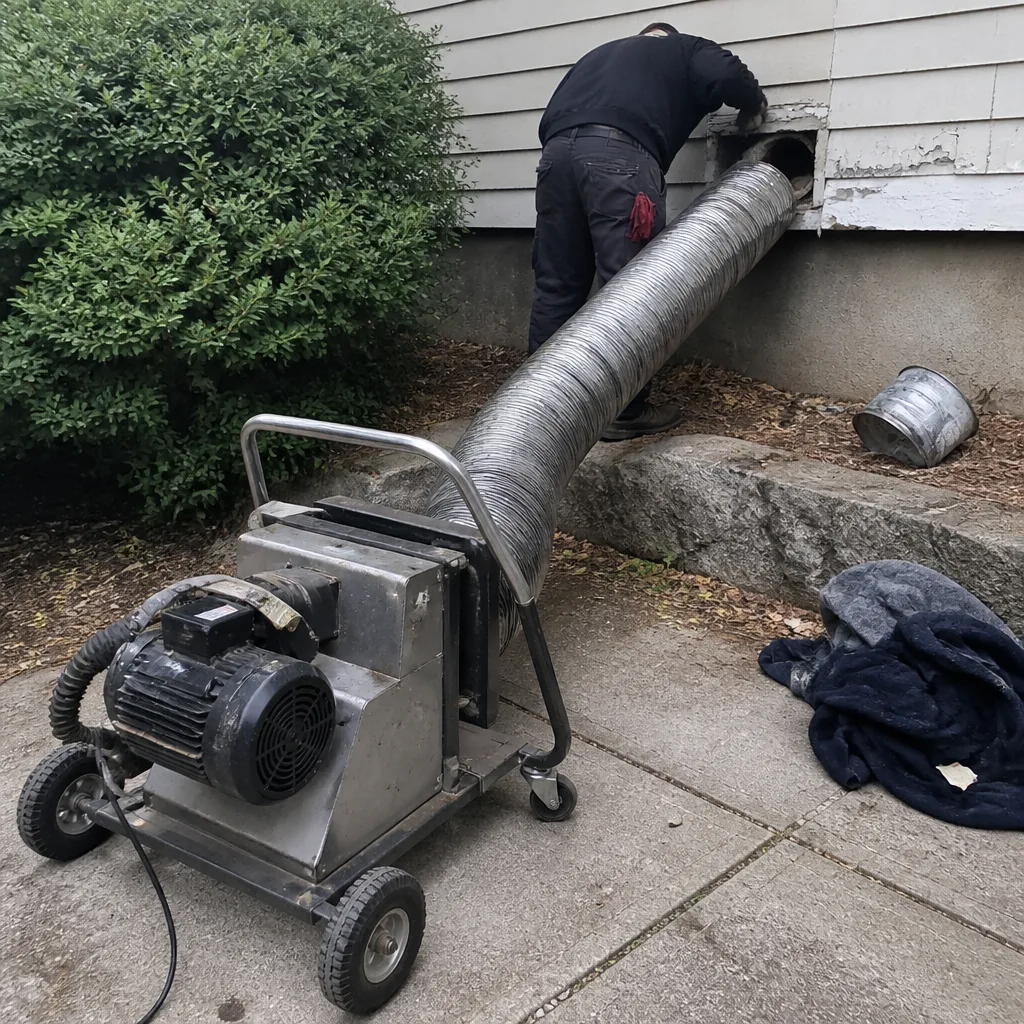 Before
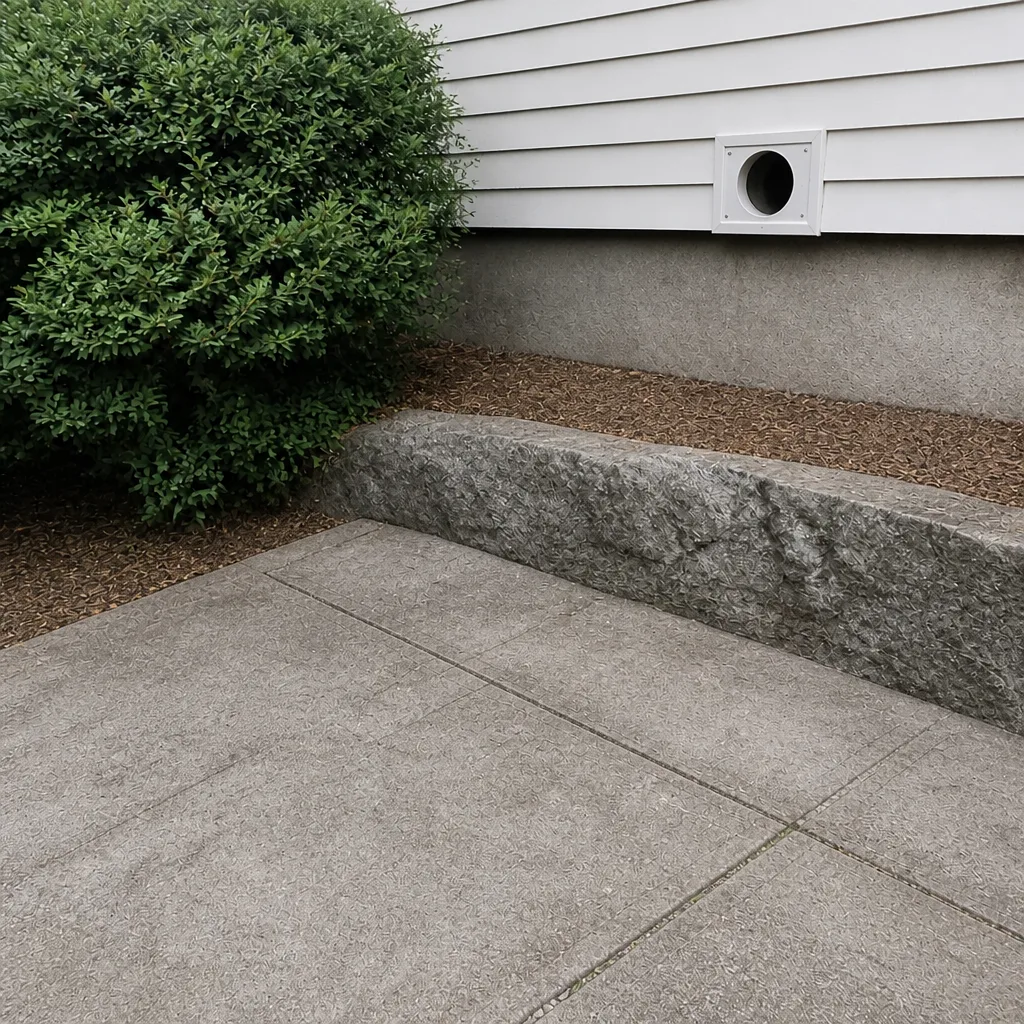 After
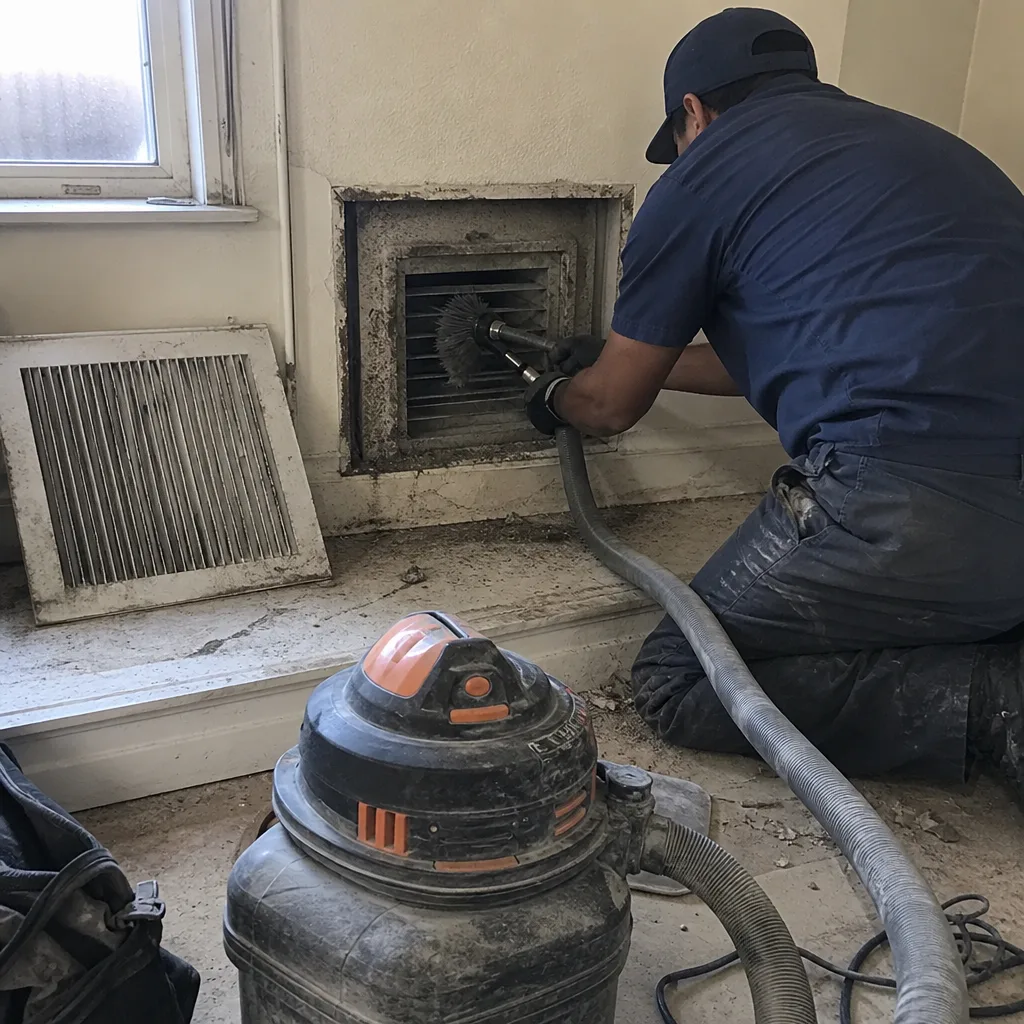 Before
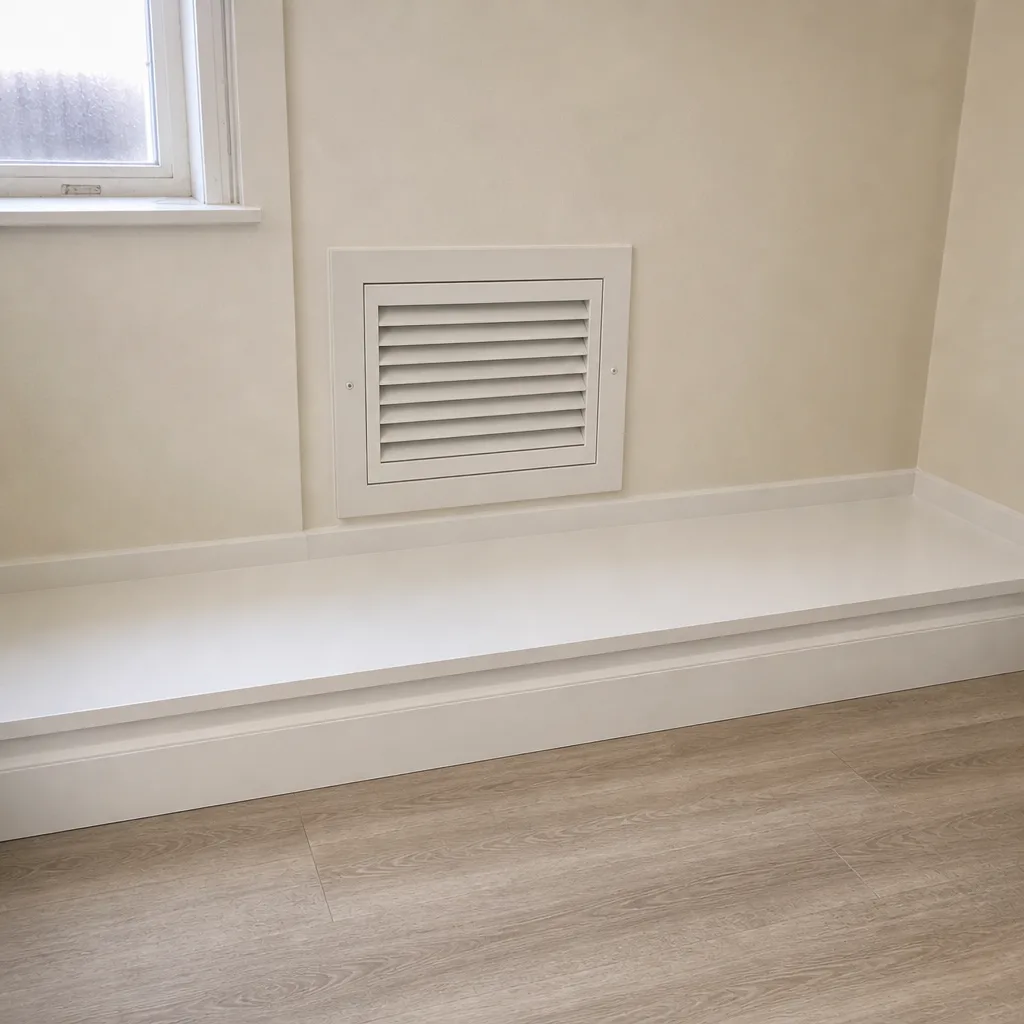 After
When to Call a Professional
Call a professional when the checklist surfaces any of the professional thresholds above: visible grit or debris in a duct, a disconnected or failed flex run, persistent indoor smoke odor after outdoor air clears, a dust mat on the indoor coil, or airflow loss that remains after you’ve reseated the filter and checked the register. When two or more of those show up together, plan a full-system service rather than a single fix. Air duct cleaning in West Valley City Air Duct Cleaning is available by free estimate, and the price is set per job in writing before work starts. Call (844) 443-4789. We answer 24/7. Fast dispatch from 7am to 7pm, Sunday through Friday.
Frequently Asked Questions
Every three to five years for most West Valley City homes. Homes with pets, recent renovation dust, or heavy winter inversion exposure usually need it sooner, and the four-checkpoint schedule in this guide is what tells you when a cleaning is due rather than a fixed date.
The most common is a filter that’s too restrictive for the blower, which shows up as a dust mat on the indoor coil face and a loss of airflow in one part of the house. The next most common is a return grille losing its seal, so dust bypasses the filter and loads the return trunk.
No. A shop vac can lift dust from a register face, but it won’t reach into the trunk runs, and it doesn’t capture what it loosens. That dust ends up in the room or back into the system. Professional systems run negative-pressure containment so the contaminant is captured as it’s dislodged.
MERV stands for Minimum Efficiency Reporting Value, and it measures how fine a particle a filter captures. A higher MERV does capture more, but it also adds static pressure. A filter the blower can’t pull through will cause more dust inside the system than a lower-MERV filter would. Match the rating to the system’s tolerance.
Yes. During an inversion, fine particulate stays trapped near the ground for days, and your return system cycles that same air through the filter and ductwork the whole time. That’s why the pre-inversion check and the post-inversion filter inspection are two of the four anchors in the schedule.
Duct cleaning helps if the smoke particles have loaded the ductwork and the filter has already been replaced. Cleaning the system and the coil face removes what the filter didn’t catch. If the house still smells smoky after that, a return trunk inspection is the next step.
Where to Go From Here
- Set four dated reminders in your calendar: pre-inversion in late October, post-inversion in March, pre-summer in May, and a post-smoke inspection whenever an outdoor smoke event ends.
- Log every filter change with the MERV rating and one line of observation.
- Track airflow room by room at each seasonal checkpoint and note any room that’s lost flow relative to the others.
- Read the thresholds in this guide and act on them without second-guessing.
- For the full-system service itself, call (844) 443-4789 for a free estimate. We answer 24/7. Fast dispatch from 7am to 7pm, Sunday through Friday.
The Bottom Line
A duct maintenance checklist earns its keep when it’s tied to the actual stressors your home faces, and West Valley City gives you a distinct set of them: inversion particulate, dry summer dust, wildfire smoke, and temperature swings that age tape and mastic fast. The four checkpoints in this guide map to those events and nothing else. Filters are chosen by pressure tolerance, not by a MERV number. Airflow is tracked as a trend. Thresholds decide DIY versus pro. Run this schedule and you’ll catch duct problems while they’re still duct-level issues, before they cost you a coil, a blower, or a room that won’t stay comfortable. When the checklist flags a professional threshold, or when the full-system cleaning is due, call (844) 443-4789. Estimates are free, the price is set per job in writing before work starts, and the equipment on the job is the professional-grade kind. For the full service overview, see West Valley City Air Duct Cleaning.
Written by the team at West Valley City Air Duct Cleaning.